BLOG

Insights, stories and updates about The Cartiers

Rest in Peace, Queen Elizabeth

Rest in Peace, Queen Elizabeth

Like so many, I've been shaken and really saddened by the death of Queen Elizabeth II. What an incredible monarch, and indeed person - in so many ways.

1 min read
Read More →

Smiling Queen Elizabeth II in a coat, wearing pearl earrings and a diamond brooch.

Like so many, I’ve been shaken and really saddened by the death of Queen Elizabeth II. What an incredible monarch, and indeed person - in so many ways. Feel very lucky to have grown up with her as our Queen, a woman who consistently embodied such important values through the decades of change.

Over the past few days, it’s been special to hear recollections of those with personal stories - I loved the one where an American tourist to Scotland didn’t recognize HM and asked if she’d ever met the Queen - to which she replied that she hadn’t but her protection officer Dickie who was with her at the time, had. The tourist was so impressed he asked the Queen to take a photo of him with the protection officer!

My grandfather would have chuckled at that story and I think in a way her death brings back memories of many of our late grandparents - those who lived through the war and great change and came out the other side with not just a sense of duty and quiet dignity but also humour, kindness and general unflappable-ness. It feels like the end of an era.

Sharing a favourite photo of Her Majesty in 175 New Bond Street - back before I was born. It was probably the umpteenth visit she’d made that day but still she’s smiling, interested and approachable as so many remember her. Rest in Peace Elizabeth the Great.

Royal Rivals: Cartier and Fabergé (Smithsonian Talk)

Royal Rivals: Cartier and Fabergé (Smithsonian Talk)

A taster of today's 'Royal Rivals' talk at the Smithsonian. Looking forward to getting back into the ring with Kieran McCarthy of Wartski to battle it out for Cartier and [Fabergé](/glossary/faberge/)...

1 min read
Read More →

Vintage Cartier diamond tiara, bracelet, clocks, and carved animal figurines collage.

A taster of today's 'Royal Rivals' talk at the Smithsonian. Looking forward to getting back into the ring with Kieran McCarthy of Wartski to battle it out for Cartier and Fabergé, and share the stories behind some of the iconic creations — like how a Fabergé egg made its way from the imperial palace to Kieran via a bric-a-brac market in the mid-West.

And in the meantime, a little quiz: these creations pictured here are a mix of Cartier and Fabergé — any guesses for which is which?

While visiting the Universal Exhibition in their hometown of Paris at the turn of the 20th century, the three Cartier brothers — grandsons of the founder of the venerable jewellery house — were awe-struck by the exquisite craftsmanship of Carl Fabergé's creations, and the seeds for a long-standing international rivalry were planted.

As part of their quest for the greatest luxury clients on the planet, both firms — one French, the other Russian — decided to open a showroom abroad. They chose not only the same city, London, but the same location, New Bond Street, and so the scene was set for an epic battle.

The Nizam of Hyderabad Cartier Necklace

The Nizam of Hyderabad Cartier Necklace

The story of the Nizam of Hyderabad Cartier necklace — and how Queen Elizabeth II wore it in her first official portraits as the new Queen.

2 min read
Read More →
The Nizam of Hyderabad Cartier Necklace

In celebration of the platinum jubilee, here's the story behind the necklace that the 25-year-old Queen Elizabeth II wore 70 years ago in her first official portraits as the new Queen.

In the mid-1930s, when the youngest of the Cartier brothers, Jacques Cartier, was running the London branch, business was good. The large English Art Works workshop was full of talented craftsmen creating significant pieces both for individual commissions and as stock for the elegant 175 New Bond Street showroom below.

After all, it was a decade not short of opportunities to wear high jewellery: from presentations at court, to jubilee celebrations (George V in 1935), to coronation festivities (George VI in 1937). Big necklaces were particularly on trend. This one — in diamond and platinum — was made in 1935 and appeared in Harper's Bazaar that year, modelled by the stylish Countess of Warwick (2nd image). It must have been good advertising because by the following year Cartier had sold it — but not for long.

They reacquired it in 1937. Fast forward ten years — including a world war and the death of Jacques Cartier — and the necklace, still in Cartier London (now under the leadership of Jean-Jacques Cartier), was about to attract some significant interest.

In 1947, the Nizam of Hyderabad, one of the richest men in the world (see 3rd image, on the front cover of Time Magazine), offered the then Princess Elizabeth a wedding gift from Cartier London: her choice of two items. The Princess chose this diamond necklace and a floral diamond tiara with removable diamond brooches (4th image shows it worn as both a tiara and a brooch; 5th image shows these wedding gifts in the press).

Since then, the necklace has been worn many times — including for the Queen's first official portraits by Dorothy Wilding in 1952 and on bank notes — and more recently it has been given a new lease of life, lent to younger members of the royal family (6th image). It looks as good in the 2020s as it did in the 1930s.

For more on the royal family's long relationship with Cartier, see my article for British Vogue.

Image Gallery

Rest in Peace, legendary Cartier designer Alfred Durante

Rest in Peace, legendary Cartier designer Alfred Durante

From the moment I met the legendary Cartier designer Alfred Durante, he welcomed me like family.

2 min read
Read More →

Two women smile beside a large illustration of a diamond floral brooch with gold leaves.

From the moment I met the legendary Cartier designer Alfred Durante, he welcomed me like family. "I knew it was you when I saw you walking down the street" were the first words he uttered as he opened the door with a warm smile.

"You had to be a Cartier — I recognise your features!" And that was the thing about Alfred: he had started out at Cartier NY in the 1950s and had known my family first-hand.

Over many chats that followed, Alfred patiently answered an endless stream of questions.

I was researching the story of The Cartiers and he always made time to help — showing me this flower brooch sketch he had drawn aged 16 at his Cartier interview, and sharing outrageous anecdotes of working for the dashing Claude Cartier (the son of Louis, Claude was my grandfather's cousin who sold Cartier NY in 1962 without telling his family).

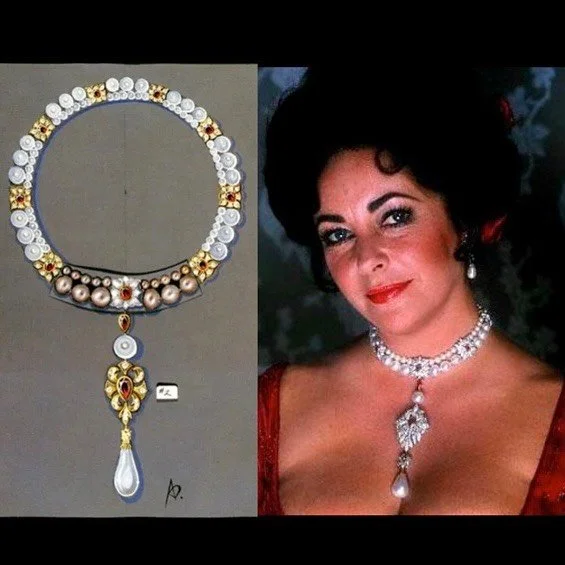
Alfred described growing up in the design studio above the Fifth Avenue showroom, apprenticing under top French designers, and designing jewels for the Duchess of Windsor, Elizabeth Taylor and Marilyn Monroe. "To say I was intimidated at first would be putting it mildly…

But I found they became comfortable, and I became comfortable, when I learned to let them do the talking, and responded with my sketches, giving life to their jewellery dreams." After leaving Cartier as VP of Design & Production, Alfred became a successful independent designer. "I'm so grateful to your family," he said in his modest way.

"How else could a boy from Brooklyn have all these opportunities?" He was fascinating to speak to because his career spanned decades of vast change in America, at Cartier and in the luxury industry. But more than that, he was kind and fun, and he became a friend.

The last time I saw Alfred was when The Cartiers was released. He came to a New York launch event with his husband Will and was the last to leave — clutching his copy of the book, supportive to the end. When we later went for a quiet lunch uptown, he told me — like a father-figure — how proud he was and how the story had needed to be told.

It meant so much coming from him and I miss him enormously.

Rest in peace, Alfred Durante, 1937–2022.

Image Gallery

Image 2

!

Amazing times at JLF Maldives

Amazing times at JLF Maldives

It's not often one has the time to really slow down and sit and listen — and learn — for days, rather than minutes, at a time.

2 min read
Read More →
Amazing times at JLF Maldives

It's not often one has the time to really slow down and sit and listen — and learn — for days, rather than minutes, at a time. Especially not on a tropical island.

Which is why it felt incredibly spoiling to have spent the last week at JLF Soneva Fushi surrounded by a group of such fun and fascinating people.

JLF is a festival that brings authors from different backgrounds together to share ideas: diplomats and novelists speaking to mathematicians about the future; historians exploring topics like war and climate change with journalists; novelists and poets sharing their sources of inspiration with directors and artists.

The talks will be online soon but in the meantime here's a taster — some of the highlights from the sessions:

  • Radhika Raje and I exploring some of the Maharajas' jewels in the context of the historic links between East and West; influencers then and now, and the question of inspiration vs. appropriation
  • Marcus du Sautoy speaking to scientist Roger Highfield about whether AI can ever be as creative as humans (what happens when you ask a computer to write the next Harry Potter novel?)
  • William Dalrymple diving into the world of espionage with Ben Macintyre
  • Peter Frankopan, author of The Silk Road, quizzing David Wallace-Wells on climate change and whether the future is as bleak as his book The Uninhabitable Earth suggests
  • Patrick Radden Keefe, author of Empire of Pain, sharing views on leadership and overcoming obstacles with Huma Abedin, Hillary Clinton's chief of staff and author of Both/And
  • Shobhaa De speaking to Vikas Swarup, author behind the film Slumdog Millionaire, on coping with the ramifications of political incorrectness in India
  • André Aciman chatting to Sanjoy K. Roy about the surprising story behind his novel — and later film — Call Me By Your Name

JLF in the pink city of Jaipur has a brilliant, intense, all-encompassing energy. This was different — calmer, more intimate — but just as magic, even if it was the rainy season and our plane couldn't land on the first day. As my budding writer daughter said: "That's a great start to a story, mum — a secret magical island protected by a storm…"

Image Gallery

The Cartiers at the JLF Festival (Maldives!)

The Cartiers at the JLF Festival (Maldives!)

Sometimes you get an invite that you just can't refuse. I'm deep in research so trying to keep my head down right now but when the brilliant @sanjoykr...

2 min read
Read More →

Collage: Francesca Cartier Brickell, a woman, and two ornate diamond, pearl, and ruby necklaces.

Sometimes you get an invite that you just can’t refuse. I’m deep in research so trying to keep my head down right now but when the brilliant @sanjoykroy @JLFlitfest got in touch to ask me to speak at the inaugural JLF Soneva Fushi Festival in…wait for it… the Maldives...I didn’t have to think too hard about it!

To give a bit of background - just before the world pressed pause in 2020, there was a brief window when I was zooming around the world (this before I even knew what a ‘zoom’ was) launching my book. One of the places I was invited to speak was JLF in its hometown: the magical pink Indian city of Jaipur. I was thrilled, I love India – I’d already spent a fair amount of time there when researching my book - and even just to hear the talks at JLF had been on my bucket list for some time (described as “the greatest literary show on earth”, JLF has hosted over 2,000 speakers over the past decade).

And sure enough, it was incredible...if slightly daunting because the first talk I attended turned out to be my own. Just an hour or so after arriving at the festival, I found myself up on stage in front of what appeared to be an endless crowd - later I was told it had been around 4000 people – sharing stories about the Cartiers and their personal links with India, including the influence India had on their designs (this image #tuttifrutti). And then, to music and applause (at least from my kids in the front row!), my book was formally launched by the Princess of Jaipur (2nd image).

This time, at #jlfsonevafushi2022 as part of 10 days of debates, talks, workshops, music, poetry and film, I’ll be speaking with Maharani @radhikaraje of Baroda. For those who joined our webinar last year (3rd image), this is a chance to hear more about the Maharaja and the jeweller. No shortage of jewels of course – Baroda was famed for its pearl carpets, diamond necklaces and incomparable pearls – but also a very human story about two men, both driven by a great sense of duty.

For those that can make it, look forward to seeing you there! Talks will also be recorded. The festival runs from May 13–22nd - see 4th image for their enticing little video!

#artandculture

Image Gallery

Cartier London Enamel Tank

Cartier London Enamel Tank

Deep in the research for the next book. Always a high point when pieces of the past come together again

1 min read
Read More →

Vintage gold Cartier Tank watch with blue enamel bezel, cream dial, and blue alligator strap.

Deep in the research for the next book. Always a high point when pieces of the past come together again…#horology #cartierwatch #watchdesign #enamelwatch#cartiertank #jeanjacquescartier #watchthisspace

Vintage Cartier London Birds

Vintage Cartier London Birds

Some vintage Cartier birds to wish you a very Happy Easter. Any favourites?

1 min read
Read More →
Vintage [Cartier London](/glossary/cartier-london/) Birds

Some vintage Cartier birds to wish you a very Happy Easter. Any favourites?

For those interested in a bit of family background: my grandfather, Jean-Jacques Cartier (last image), loved playing around with the window displays in the Cartier London store at different times of year.

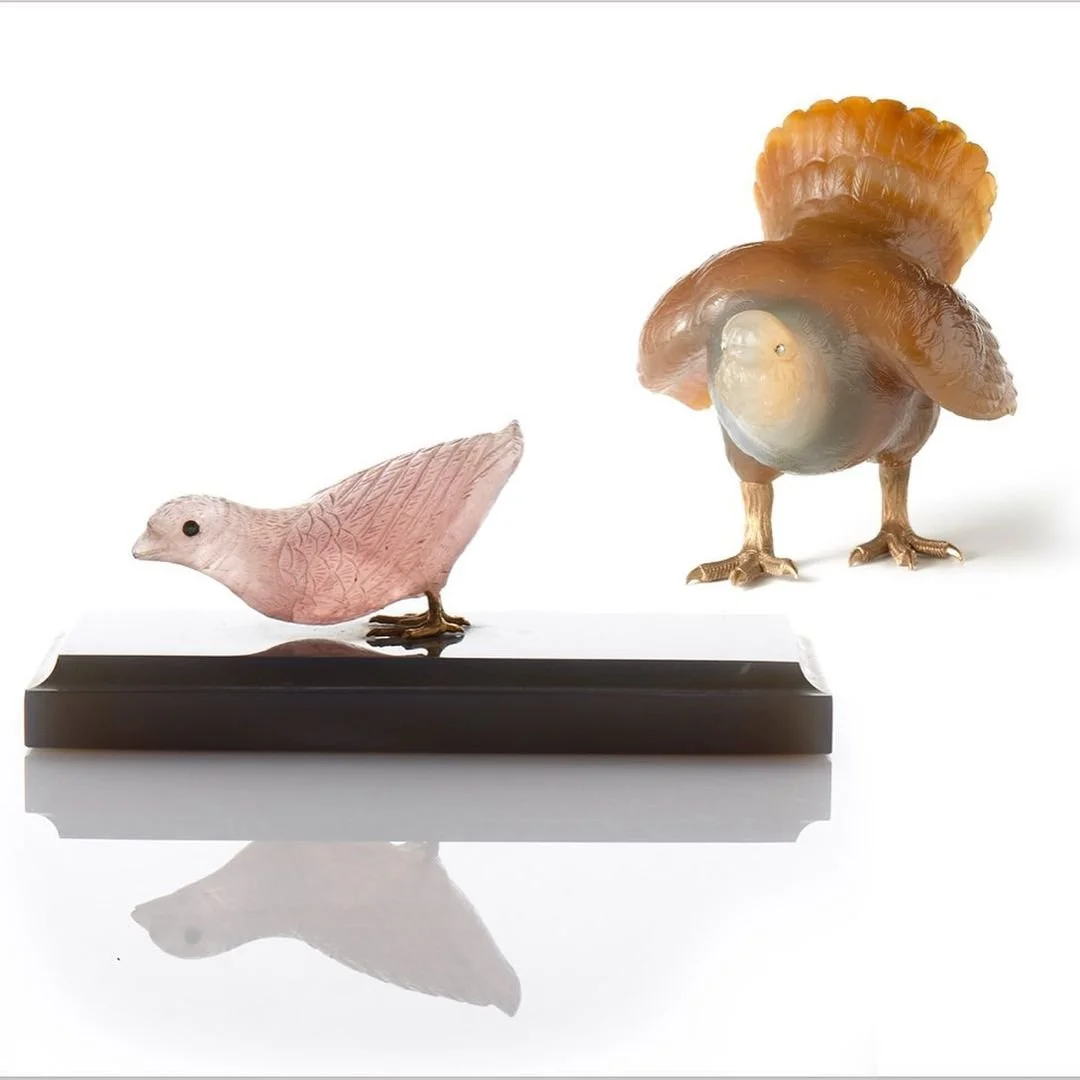
In the lead-up to Easter, he would suggest that Cartier's jewellery designers focus on designs for bird brooches that incorporated some of the gemstones they had in stock at the time — so an opal could become a kingfisher, a ruby could feature in an exotic bird, and chalcedony could be transformed into an owl.

Once Jean-Jacques had approved which designs would become reality, the chosen ones were passed to the English Art Works workshop above the 175 New Bond Street showroom, where a busy team of talented mounters, setters and polishers would bring them to life.

Finally, only after they had passed his stringent quality test — which included them being worn by an employee to check the stones were angled in just the right way to catch the light — would it be time for them to be displayed in the windows. Jean-Jacques would create little spring-themed scenes to delight those walking past.

I can imagine him out on New Bond Street, looking in at the windows, checking and rechecking that the finished look was just right. He was something of a perfectionist.

Here, in his memory, is a little bejewelled trip back in time at Easter.

Credits (left to right): First row: S.J. Phillips (ruby exotic), Hindman Auctions (coral and emerald). Second row: Bonhams (agate & sapphire owl), Christie's (gold and coral hen), Elstob & Elstob (emerald, citrine and diamond). Third row: Christie's (opal kingfisher), 1stDibs (gold and spinel robin), Doyle New York (gold, white chalcedony duck).

Image Gallery

Cartier bird brooches

[Jean-Jacques Cartier](/glossary/jean-jacques-cartier/) collection <div class="blog-gallery"> creating window displays Vintage Cartier London bird jewelry
Cartier London & English Art Works: The Room Where It Happened

Cartier London & English Art Works: The Room Where It Happened

It was a special experience to speak at Cartier London recently — in the very space where the English Art Works workshop once stood. This slide shows the workshop that Jacques Cartier created in the 1920s on the 3rd floor of 175 New Bond Street, now La Résidence.

2 min read
Read More →
[Cartier London](/glossary/cartier-london/) English Art Works workshop

It was a wonderful experience to share stories about The Cartiers at Cartier London recently. This slide shows the English Art Works workshop that Jacques Cartier created in the 1920s — on the 3rd floor of 175 New Bond Street, the area that is now La Résidence and, as it turned out, the exact space where I was giving the presentation.

By the time Jacques set up the London workshop, he had already completed an apprenticeship in Paris, moved to 175 New Bond Street, survived being gassed in WWI, and helped Pierre establish the Cartier New York workshop. It was a remarkable body of experience to bring to a new creative endeavour.

I loved hearing stories about the Cartier workshops from my grandfather, who spent a great deal of time up here. This was the engine room of Cartier London — the far-from-glamorous setting where magic happened. Slabs of precious metals and unpolished gems were transformed into gleaming creations worthy of the elegant showroom below.

It was a happy place: those who worked there spoke of chatter, songs and pipe smoke filling the air, and of it feeling like a family.

The jewels created in this room are legendary: the 1930s emerald and diamond Lady Granard necklace pictured behind me, the Queen's pink diamond Williamson brooch, the Halo tiara, the Duchess of Windsor's emerald engagement ring.

And when working with such valuable raw materials, it was important not to waste anything. The mounters wore a leather skin draped across their knees like an apron — after months of work, these would become ingrained with minute particles of precious metals and be sent off to specialist gold firms to be incinerated and the valuable dust extracted.

Even the female polishers had to wash their hair each Friday in the sink at work so the wastewater could be sieved for fine particles that had settled during polishing.

Many thanks to Laurent Feniou for inviting me to speak at Cartier London, just over 100 years after the English Art Works workshop was founded — it was such fun to share stories and sign books, especially in the room where it happened.

Image Gallery

Cartier And Faberge Talk

Cartier And Faberge Talk

Well, that was fun... Thank you to all who joined Kieran McCarthy of Wartski (in the [Fabergé](/glossary/faberge/) corner) and me (team Cartiers) as we battled it out at the...

2 min read
Read More →
Cartier And Faberge Talk

Well, that was fun... Thank you to all who joined Kieran McCarthy of Wartski (in the Fabergé corner) and me (team Cartiers) as we battled it out at the V&A in our Rivals on Bond Street talk.

We dived into the colourful history of two families, similar in many ways: both took a leap of faith and established a business in the 1840s, both founders passed it on to their sons three decades later, both families struggled to keep their firm alive through adversity and both were determined to make lasting pieces of the highest quality for some of the best clients in the world.

I talked about the Cartiers' "Never Copy, Only Create" motto and whether Fabergé was the exception to the rule, looking at examples like the animals — the kangaroos in the fifth image stumped most people: it's Fabergé on the right and Cartier on the left.

We also considered how less-than-thrilled Jacques Cartier would have been when Fabergé moved next door on New Bond Street, and dived into the lives — and bejewelled purchases — of their colourful clients: from the Jeff Bezos of the day, Ernest Cassel (with his fantastic Fabergé roulette wheel and Cartier diamond fern brooches) to the divisive Mrs Greville ("a galumphing, greedy, snobbish old toad who watered her chops at the sight of royalty," according to Cecil Beaton), whose legendary collection of Cartier jewellery was bequeathed to Queen Elizabeth in 1942 and whose gift of a Fabergé dog — in the likeness of King Edward VII's dog, Caesar — to Queen Alexandra in 1910 is now part of the museum's Fabergé exhibition.

We ended by looking at the What If: what if the revolution hadn't put an end to Carl Fabergé's work? Would the next generation of Fabergés have been able to adapt their offering like the Cartiers did, or were they too fractured as a family to reach those heights, lacking that secret ingredient that the Cartier brothers had in droves — an incredibly tight bond and a shared ambition to be the best?

Wonderful to share the stories with so many of you — we hear it was a record-breaking event for the V&A. Looking forward to a rematch at some point, as there was still so much we could have said and shown. An hour goes too fast!

Image Gallery

A Weekend Game: Cartier and Fabergé

A Weekend Game: Cartier and Fabergé

A weekend game. Both made over a century ago, one of these owls is Cartier, the other [Fabergé](/glossary/faberge/). Two master jewellers who were battling it out for the b...

1 min read
Read More →

Carved stone owl figurines: two amber owls with ruby eyes, one white owl with sapphire eyes.

A weekend game. Both made over a century ago, one of these owls is Cartier, the other Fabergé — two master jewellers who were battling it out for the business of the Belle Époque set. Can you tell which is which?

The two firms shared more than a rivalry. They were neighbours on New Bond Street, each pushing the other to greater heights of craftsmanship and imagination. Both loved enamel, precious stones and the animal kingdom as subjects.

And yet each had a distinctive voice: Fabergé's work tends towards whimsy and narrative, Cartier's towards elegance and precision. The answer is in the second and third images below.

Image Gallery

Image 2

Two dark green carved kangaroos, one with a joey in its pouch.

!

Snapshots in Time - A Fabergé Winter Egg and Cartier's Tiara

Snapshots in Time - A Fabergé Winter Egg and Cartier's Tiara

With chilly booster queues replacing Christmas parties, masked carol concerts and many holiday plans in disarray, perhaps we could all do with some be...

1 min read
Read More →

Green Fabergé Gatchina Palace Egg, open to reveal miniature palace, with portraits and jewels.

With chilly booster queues replacing Christmas parties, masked carol concerts and many holiday plans in disarray, perhaps we could all do with some bejewelled escapism.

On the theme of a cold midwinter, it surely doesn't get much better than this Fabergé Winter egg — gifted to Tsarina Maria Feodorovna from Tsar Nicholas II at Easter 1913 (no pressure on the gift front…) and designed by the brilliant Alma Pihl, one of only two female Fabergé designers at a time when this was almost unheard of.

Above the icy egg sits Cartier's diamond and pearl tiara, made in Paris in the same year and said to have been inspired by the Bolin pearl and diamond tiara owned by the Cartiers' most important Russian patron, Grand Duchess Vladimir.

A snapshot in time, these two creations not only epitomise the glamour of the early twentieth century, but also encapsulate the creative battle between two firms — one Russian, the other French — for the greatest luxury clients on the planet.

It was in 1900, while visiting the Universal Exhibition in their hometown of Paris, that the Cartier brothers first encountered the full extent of Carl Fabergé's exquisite creations.

Back then, Cartier et Fils was still too small to participate in the Exhibition, while Fabergé's stand — with its Imperial Easter Eggs, colourful objets d'art and sparkling jewels — was the talk of the town.

Awed by the quality of Fabergé's display, the ambitious Cartiers were inspired to visit Russia themselves, and the seeds of a long-standing rivalry were planted. In time, both firms decided to open a showroom abroad.

They chose not only the same city — London — but the same street, New Bond Street, and were only one door away from each other (Cartier on the left, Fabergé on the right). And so the scene was set for an epic creative battle.

Image Gallery

A Glimpse Into Christmas in Cartier London a Century Ago

A Glimpse Into Christmas in Cartier London a Century Ago

To kick off December, a glimpse behind the scenes of Christmas in Cartier London 106 years ago.

1 min read
Read More →

Gold and pink enamel Cartier watch face next to a 1915-1916 document with flags.

To kick off December, a glimpse behind the scenes of Christmas in Cartier London 106 years ago. This card was sent to clients in 1915, when a raging world war had forced many employees — and clients — to exchange tiaras for the trenches.

Jacques Cartier, the youngest Cartier brother who had established the 175 New Bond Street branch just six years earlier, was among those fighting for his country.

Rather than celebrating Christmas — and his wedding anniversary — with champagne (he had married my great-grandmother Nelly just three years earlier), he was leading his cavalry regiment, Les Dragons, into dangerous battle in France's Champagne region.

And yet, though far from family and firm, Jacques remained heavily involved in the management of 175 New Bond Street through letters. He felt a strong sense of duty to keep Cartier London going, believing that his dedicated, brave employees should have a business to return to once war was over.

Hence this card — a snapshot of social history that includes, of course, a respectful reference to the First World War. It shows the allies' flags on the front "with the respectful complements of Messrs Cartier" — but also reveals the family's steely determination and pragmatism, a refusal to give up even when confronted with a cataclysmic world war.

Inside it reads: "Messieurs Cartiers have the pleasure of announcing that in spite of present circumstances, they have been able to receive from their Paris branch a very large selection of Christmas presents." It would have been interesting to see which presents made it to the London showroom in 1915 — most likely smaller items of jewellery, a Belle Époque brooch and sapphire cufflinks perhaps, alongside cigarette cases and timepieces like this sweet pink guilloché enamel Cartier clock (inspired by the Cartier brothers' pre-war trips to Russia), with letters in place of numbers. In this clock the letters read 'BONS SOUHAITS', which translates as 'good wishes' — a rather apt message for this time of year.

Cartier and Persian / Islamic Inspiration

Cartier and Persian / Islamic Inspiration

'The Persian style,' my grandfather once explained to me, 'was the purest influence on the Cartier style.

1 min read
Read More →

Cartier tiara: rows of carved greenish-blue turquoise and sparkling diamonds in white metal.

'The Persian style,' my grandfather once explained to me, 'was the purest influence on the Cartier style.' As a child, he had missed his parents on their many trips to India and the Middle East but those long voyages abroad had given his father, Jacques Cartier, the seeds of inspiration to create a new style of jewellery.

Pencil drawings of their surroundings — temples, mosques, carvings, motifs — scribbled in his travel diaries would later be transformed into clocks, vanity cases and brooches, while suitcases filled with exotic objects — rugs, paintings, sculptures, fabrics — would inspire teams of designers back home.

The seeds of inspiration came from far and wide, from old and new, but somehow the jewels they inspired always tapped into the mood of the day. The almond-shaped motifs in a 1920s bandeau may have been inspired by pre-Islamic Iranian book-bindings but, made in diamonds, framed by rubies and set against black steel (pictured), they became strikingly avant-garde.

Apt then that a new exhibition — Cartier and Islamic Art: In Search of Modernity, at the Musée des Arts Décoratifs in Paris — celebrates the links between arguably the most significant creative influence on the Cartiers, the Islamic Arts, and the glittering creations themselves.

There is no absence of sparkle on display, but the curators also wanted to show the jewels and precious objects in a new light, alongside the sources of inspiration. The result is that carved emeralds, enormous diamonds and blood-red rubies sit alongside 14th-century Iranian tiles, ancient books, Turkish silks, Iznik ceramics and many sketches, designs and photographs.

It's rare to have the chance to see inside the creative process like this — including so many sketches and designs by Charles Jacqueau, the genius head designer at Cartier Paris through the Art Deco period and a man the Cartier brothers and their descendants admired enormously. Has anyone else seen it? I'd love to know your thoughts.

Image Gallery

Image 2

Hand-drawn jewellery designs and geometric patterns fill an open, aged sketchbook.

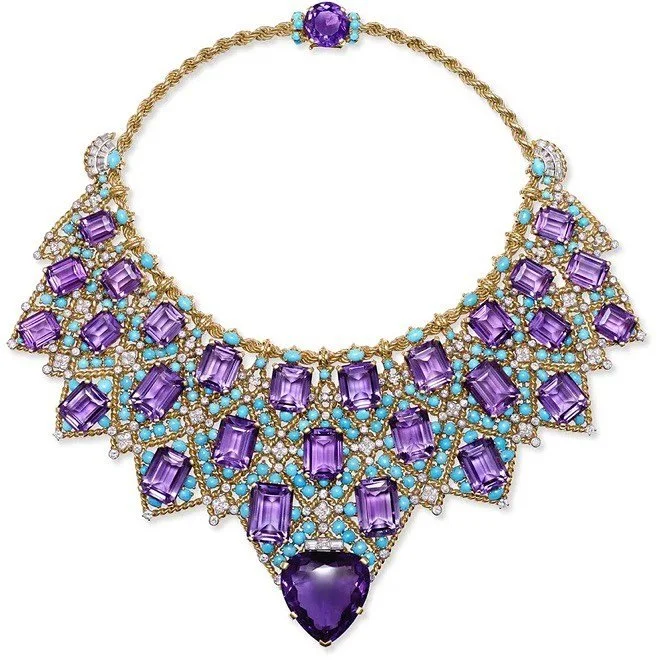
Wallis Simpson in a striking amethyst and turquoise bib necklace, beside the Duke of Windsor.

Ornate brown inlaid panel. Right: Cartier mother-of-pearl, turquoise, diamond, and carved emerald compact.

Charles Jacquiau design drawing: green jade and rose-cut diamond paisley brooch.

Art Deco crystal clock with blue enamel, diamond numerals, rubies, and green jade details.

Art Deco black enamel tiara with pear-shaped diamonds, round diamonds, and ruby borders.

!

Crash Watch: The Most Important Vintage Watch of 2021

Crash Watch: The Most Important Vintage Watch of 2021

Amazing to see interest in the Crash Watch continuing to snowball — not sure my grandfather would have believed it.

1 min read
Read More →

Man in light blue hat and cream shirt wearing a gold Cartier Crash watch.

Amazing to see interest in the Crash Watch continuing to snowball — not sure my grandfather would have believed it. In a way, the Crash Watch was born out of the family motto "Never Copy, Only Create" — the design was ground-breaking in its refusal to follow conventional watch shapes. Neither rectangular, oval, square nor circular, it was bold and different.

Too different for some: ironically, when Jean-Jacques Cartier first released it in Swinging Sixties Cartier London, the unusual shape proved almost too radical for the time and one of the firm's top watch clients, the actor Stuart Granger, was said to have returned his for something more conventional!

Today, over half a century on, if press and celebrity interest and recent auction records are anything to go by, it's become something of a design icon — though a rare one. Just over a dozen of the original London Crashes were ever made under Jean-Jacques Cartier, and since then there have only been a few limited series.

For more, the Hodinkee article "How the Cartier Crash Became The Most Important Vintage Watch of 2021" traces the phenomenon all the way from its origins — in the collaboration between Jean-Jacques and Rupert Emmerson up on the top floors of 175 New Bond Street in the 1960s — to American rapper Tyler the Creator wearing it at a Monaco watch auction recently.

Will vintage Cartier London watch designs sustain this level of interest in the years ahead? What do you think?


An original Cartier Crash: Hand-drawn by Rupert Emmerson

An original Cartier Crash: Hand-drawn by Rupert Emmerson

Back to 1960s London with this one... The Kinks in the charts (‘Dedicated follower of Fashion’), the British fashion scene leading the way, and the Lo...

1 min read
Read More →

Back to 1960s London with this one... The Kinks in the charts (‘Dedicated follower of Fashion’), the British fashion scene leading the way, and the London Crash watch making its debut. Half a century ago, while the Mods were cruising around on their vespers and women were rejecting twin sets in favour of Mary Quant’s new mini skirts, up in the top rooms of 175 New Bond Street, these watches were created by expert craftsmen under the watchful eye of my perfectionist grandfather, Jean-Jacques Cartier. Head designer Emmerson even drew on the ‘Cartier London’ by hand.. Exciting therefore to try on one of the original series (this one, from 1970) this week @sothebyswatches Geneva. I love it but then again I’m biased...what do you think?#crashwatch #jeanjacquescartier #londoncrash #cartierlondon #cartierwatch #vintagecartier


Jaeger Le Coultre: Trying Perlage

Jaeger Le Coultre: Trying Perlage

A quick clip from when I tried out the technique of perlage at the Jaeger-LeCoultre Reverso Stories exhibition in Paris — a decorative technique using small, overlapping circles applied to watch movements.

1 min read
Read More →
Trying perlage at the Jaeger-LeCoultre Reverso Stories exhibition

A quick clip from when I tried out the technique of perlage at the Jaeger-LeCoultre Reverso Stories exhibition in Paris, just before attending the Atelier d'Antoine workshop.

I didn't know much before about perlage (also known as 'circular graining'): it's a decorative technique using small, overlapping circles that are sometimes applied to watch movements. The word 'perlage' literally means 'pearling' — the overlapping circles ground into the metal resemble the shape of pearls.

Apparently, this finish is one of the few not yet to be automated — a watchmaker's hand is still required to apply the circular graining. The technique requires precision, attention to detail and a great deal of muscle memory in order to create a uniform finish. Needless to say, I don't think I cracked it, but it was fun to try!

Reverso History: Cesar de Trey, Giorgio Corvo and Jaeger Lecoultre

Reverso History: Cesar de Trey, Giorgio Corvo and Jaeger Lecoultre

The Reverso has long been a popular watch design. It was the watch my grandfather Jean-Jacques Cartier wore when riding horses, as its clever mechanism protected the dial while galloping through the countryside...

1 min read
Read More →

Two gold rectangular watches with brown straps frame a vintage black and white polo match.

The Reverso has long been a popular watch design. It was the watch my grandfather, Jean-Jacques Cartier, wore when riding horses as its clever mechanism protected the dial while galloping through the countryside.

This year marks the Reverso's 90th anniversary: the story goes that, around 1930, César de Trey, a Swiss businessman in dentistry and then watches, was visiting India where British army officers had taken up polo.

The combination of swinging mallets and fast horses was not exactly watch-friendly, so de Trey is said to have imagined a design whereby the fragile glass dial could be protected by flipping over the case.

Not long after, industrial designer René Alfred Chauvot patented "a watch capable of sliding in its support and being completely turned over" and by the summer of 1931, de Trey had bought the rights to launch the Reverso.

He partnered with Jacques David LeCoultre (at this stage Jaeger and LeCoultre were still separate firms). As one of the world's first sports watches, it didn't take long for the Reverso to make a mark. I love some of the early adverts (3rd and 4th images), but by the 1960s the design had fallen into relative obscurity.

It was revived the following decade when Giorgio Corvo, an Italian watch dealer, happened upon a drawer full of the last 200 Reverso cases when visiting the JLC factory. He bought them, fitted the movements and sold out within a month.

Not long after, JLC decided to revive the watch — in 1981, one of its engineers redesigned it — and today it's an iconic design. As someone fascinated by design history, I think it's great that JLC are sharing their past in such an open and hands-on way. There's also a fine new book on the Reverso by Nicholas Foulkes for anyone who wants to go deeper. Any other Reverso fans out there?

Image Gallery

88 Cartier Watches in 1 Collection!

88 Cartier Watches in 1 Collection!

It’s rare that a large amount of Cartier vintage watches make an appearance at the same time but that’s what happened this weekend when 88 #cartierwat...

2 min read
Read More →

Six vintage Cartier watches: octagonal, oval, round, rectangular gold cases, leather straps.

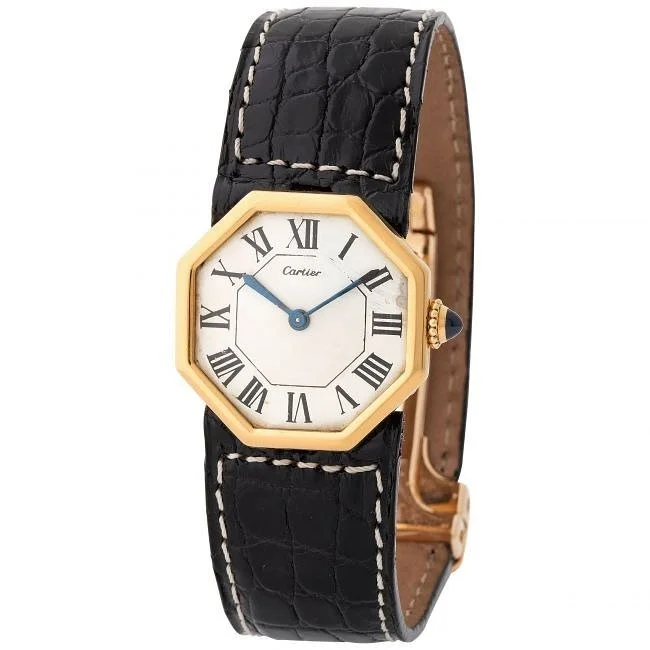
It's rare that a large amount of Cartier vintage watches make an appearance at the same time but that's what happened this weekend when 88 #cartierwatches all part of a single collection, appeared at auction in Monaco.

Hard to pick a single favourite but I thought I'd start by sharing the six #CartierLondon ones made under my grandfather #JeanJacquesCartier in the 1960s and 70s:

  1. a yellow gold Octagonal
  2. a white gold Maxi Oval
  3. a yellow gold Decagonal
  4. a white gold Round
  5. a classic yellow gold Tank
  6. a yellow gold Octagonal Allongée

Those eagle-eyed amongst you might have noticed a seventh image of a watch that was not made in London or over this time period: a 1991 Paris #crashwatch . Including it in this group as it was a revival of one of the iconic #CartierLondonwatch designs first conceived in the Swinging Sixties above the showroom in #175newbondstreet .

I've talked about the origin story of this watch before, and thanks to @rescapement for summarising it as follows in an article this weekend:

"If I have one dying wish, I hope that this is the last auction catalog that parrots the urban legend that the Cartier Crash was inspired by a car crash in London. In the 2019 book The Cartiers, Francesca Cartier Brickell (a Rescapement Recommended Read) dispelled the common origin story of the Cartier Crash: it was never the result of a car crash melting a Cartier Baignoire Allongée, but instead the product of a collaboration between Jean-Jacques Cartier (who ran the Cartier London branch from the 1940s through the 1970s) and designer #RupertEmmerson. Sometimes, a great design is a great design — it doesn't need some apocryphal story to raise its stature. Such is the case with the Cartier Crash."

Thanks to @monacolegendgroup for the wonderful images, and the chance to see — even online — so many vintage watches in one place. Given how rare many of these watches were, it was a real treat... I'll give the sold prices in a comment below but first of all, when it comes to watch design, which of these #CartierLondonwatches would you choose? Classic or more unusual? Would love to hear your favourite(s) in the comments below.

Image Gallery

Image 2

Oval Cartier London watch with grey dial, blue hands, diamond crown, and grey alligator strap.

Vintage Cartier octagonal gold watch with cream dial, Roman numerals, and brown leather strap.

Vintage Cartier watch: platinum case, white dial, black Roman numerals, blue hands, dark leather strap.

Gold Cartier Tank watch with white dial, black Roman numerals, and black leather strap.

Vintage gold Cartier watch with elongated octagonal case, white dial, and brown alligator strap.

Gold Cartier Crash watch with a distorted case, white dial, and green leather strap.

!

Atelier d’Antoine Jaeger Lecoultre Reverso Workshop in Paris

Atelier d’Antoine Jaeger Lecoultre Reverso Workshop in Paris

Just attended the first Atelier d’Antoine Reverso workshop in Paris by Jaeger Le Coultre who are celebrating the Reverso’s 90th birthday.

1 min read
Read More →

Three rectangular reversible watches with leather straps lie on a vintage patent drawing.

Just attended the first Atelier d’Antoine #Reverso workshop in Paris by @JaegerLeCoultre who are celebrating the Reverso’s 90th birthday. 🎉 More to follow about what my grandfather called the “watchmaker’s watchmaker” and this iconic design and process (not a job for the impatient!) but here’s a taster from today...

Image Gallery

Cartier and the Maharaja

Cartier and the Maharaja

Repost @bazaarindia - CARTIER AND THE MAHARAJA: In a Bazaar exclusive, Francesca Cartier Brickell, a descendant of the iconic jewellery family, retrac...

1 min read
Read More →

Regal man in a blue turban and golden robe, adorned with elaborate diamond and gemstone jewellery.

Repost @bazaarindia — CARTIER AND THE MAHARAJA: In a Bazaar exclusive, Francesca Cartier Brickell, a descendant of the iconic jewellery family, retraces Jacques Cartier's tryst with India that led the brand to fame.

"The first time my great-grandfather, Jacques Cartier, visited India was for the Delhi Durbar in 1911. For him, the Durbar represented a unique opportunity to meet many important, potential clients in one place. It was a successful strategy: after the Durbar, Jacques was invited to visit many palaces around the country... Some of the jewels Cartier made for the Maharajas in the 1920s, at the heart of Art Deco, rank among the most exquisite of all time. From the Maharaja of Patiala's Diamond Necklace to the Maharaja of Kapurthala's emerald turban ornament (with a 117.4-carat carved, hexagonal emerald at its centre), to the Maharaja of Nawanagar's necklace (containing the most superb cascade of coloured diamonds perhaps ever assembled), they were extraordinary. Sadly, not all survive in their original form today..."

Image Gallery

Image 2

Large cushion-cut blue diamond pendant surrounded by white diamonds on a diamond necklace.

Black and white portrait of a man with glasses, mustache, and a pipe in his mouth.

Portrait of a man in a gold brocade uniform, emerald turban, and many medals.

Black and white: Jacques Cartier and Indian men on floor, examining jewels and papers.

Red book cover with white and gold Art Deco typography for 'The Cartiers'.

Francesca Cartier Brickell smiling, wearing a gold cross necklace, standing by a carved wooden table.

!

The Cartier Diamond Part II

The Cartier Diamond Part II

(Read The Cartier Diamond Part I first) After Kenmore won the newly named 69.42ct Cartierdiamond, Richard Burton, the underbidder, was furious.

2 min read
Read More →

Woman's hand wearing a large, sparkling pear-shaped diamond ring.

(Read The Cartier Diamond Part I first)

After Kenmore won the newly named 69.42ct #Cartierdiamond, Richard Burton, the underbidder, was furious. “I turned into a raving maniac,” he wrote. “Elizabeth [Taylor] was as sweet as only she could be and protested that it didn’t matter, that she didn’t mind if she didn’t have it, that there was much more in life than baubles...

The inference was that she would make do. But not me! . . . I screamed at Aaron [Burton’s lawyer] that bugger Cartiers, I was going to get that diamond if it cost me my life or 2 million dollars whichever was the greater.”Kenmore agreed to sell the diamond to Burton on one condition: before it was shipped to him and renamed, it would be displayed in #CartierNewYork as ‘The Cartier diamond.’ Burton, determined that his wife #LizTaylor should have it, agreed: "I wanted that diamond because it is incomparably lovely ... and it should be on the loveliest woman in the world.

I would have had a fit if it went to Jackie Kennedy or Sophia Loren”.In a brilliant publicity coup for Cartier, a large ad was published in The New York Times to announce the public viewing of the record-breaking diamond that had just been bought by the world-famous movie star couple, and thousands travelled to the 5th Ave mansion to see it every day (2nd/3rd images).Soon after, the diamond was shipped to its new owners and Elizabeth found herself the owner of a rather large ring (5th image).

It was duly renamed the #TaylorBurtonDiamond but the problem, #LizTaylor conceded, was that “even for me, it was too big” (“This diamond has so many carats it’s almost a turnip,” Burton quipped).

So it was back to Cartier with a request to transform it into a necklace (worn here at the 1970 Oscars, and in 4th image at Princess Grace of Monaco's 40th birthday).

After her divorce from Burton, Taylor sold the necklace for almost $3m and ploughed part of the proceeds back into Africa, where the diamond had originally been discovered (she funded the construction of a hospital in Botswana).


Image Gallery