New Spanish Edition of The Cartiers
What better way to celebrate the Spring sunshine than with a new Spanish edition!
1 min read Read More →
Insights, stories and updates about The Cartiers
What better way to celebrate the Spring sunshine than with a new Spanish edition!
1 min read Read More →New Korean edition just landed! Hope all the Korean speakers out there enjoy it.
1 min read
New Korean edition just landed! Hope all the Korean speakers out there enjoy it ❤️
In 1969, Cartier bought a 69.42-carat diamond at auction for $1.05 million. The press speculated it would go to Jackie Onassis. It went to Richard Burton — for Elizabeth Taylor.
1 min read

1969 New York, October 23. 'QUITE A STONE - This 69.42 carat diamond ring is displayed Thursday at Park-Bernet Galleries after it was bought for $1.05million by Robert Kenmore, chairman of the Kenton Corp., which owns Cartier's. It was speculated that the ring's next buyer would be Jacqueline Kennedy Onassis although a spokesman for Cartier's declined to say whether the firm had a customer for the gem or even to admit that the firm had bought it.'
Fun to find this article and photo from a few decades ago. As I wrote about in The Cartiers, the auction of this enormous diamond was extraordinary, and almost immediately after Cartier had bought it, they sold it to Richard Burton who gifted it to Elizabeth Taylor. Displayed in Cartier New York before being passed on to the Hollywood icon, it attracted huge crowds (2nd and 3rd images). Not long after that, craftsmen in Cartier London recalled the actress coming into the workshop above 175 New Bond Street to have the ring resized and polished, refusing to let it out of her sight for a second, while the craftsmen had act as if it was no big deal there was a Hollywood icon standing over them as they worked.
Later #ElizabethTaylor had the stone (renamed as the #taylorburtondiamond), remounted as a necklace which she wore to the 1970s Oscars (4th image). Burton quipped "this diamond has so many carats it's almost a turnip" while Taylor admitted "even to me, it was too big."
#cartierdiamonds #diamondring
Wonderful few days in Prague — a rather surreal moment on my namesake TV, marching guards, astronomical clocks, and the Czech book launch of The Cartiers.
1 min read
Wonderful few days in Prague 🎄 Rather surreal moment on my namesake TV, marching guards, astronomical clocks, music, views from church towers, Christmas markets and the book launch of #thecartiers in Czech complete with simultaneous translation! Thanks to all who came along. What a magical city, loved it.


When I asked my grandfather, Jean-Jacques Cartier, what piece he was most proud of creating, his answer caught me by surprise.
1 min read
When I asked my grandfather, Jean-Jacques Cartier, what piece he was most proud of creating, his answer caught me by surprise. This short film follows my quest to trace the extraordinary jewel he told me about.
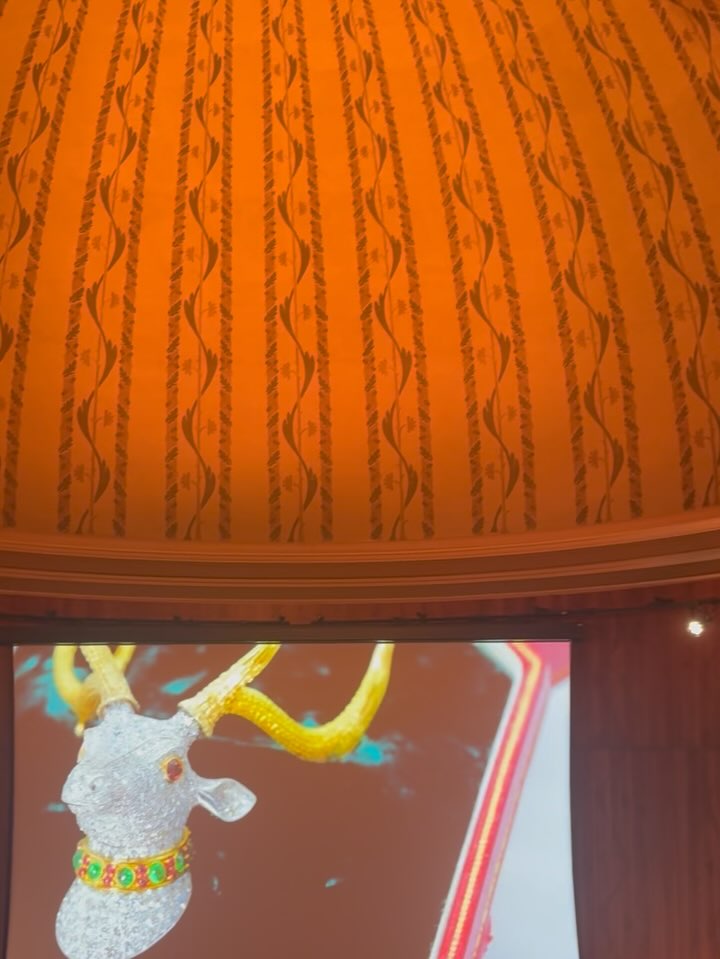
In 1966, Princess Lilian de Rethy, my grandmother's sister, had approached Jean-Jacques with an extraordinary vision. Passionate about stags and their conservation, her dream was a full three-dimensional relief of a stag's head as a brooch, completely covered in gems.
This wasn't just any commission; it was so technically challenging that most workshops would have turned it away. It had to be realistic and light and wearable but also strong enough to hold all the precious gems securely without any metal being visible. For a piece this important – it was to be a 25th anniversary gift from her husband - and complicated, she knew only her perfectionist brother-in-law would do her vision justice.
Every part was hand made by multiple skilled craftsmen. The platinum mount was literally hammered into shape—nothing was cast. The setting was challenging because unlike most jewels, this was fully three-dimensional and required great skill to invisibly set in hard to reach places like inside the ears. When it came to the antlers, my grandfather found an actual deer antler and took it on the commuter train to London so the engraver could copy its rough texture exactly!
Years later, I met craftsmen who had worked for him at English Art Works, Cartier London's workshop. When I asked what they were most proud of creating, they gave the same answer: the stag brooch.
An idea came to me—what if I could reunite these craftsmen with their masterpiece? I reached out to my cousin Esmeralda, Princess Lilian's daughter, and she wonderfully agreed to make this reunion happen.
This film captures that emotional moment when artist meets artwork decades later—revealing the deep personal connection that transcends time. A story where family legacy meets extraordinary craftsmanship, and where the pursuit of perfection created something truly timeless.
#Craftsmanship #JewelryHistory #CartierLondon #Heritage #JeanJacquesCartier #FamilyLegacy #Cartier
Such fun to speak at the V&A again — this time all about Cartier London and those magical untold stories from my grandfather Jean-Jacques Cartier and the brilliant craftsmen who worked there with him.
1 min read
Such fun to speak @vamuseum again last night. This time all about Cartier London and those magical untold stories I've been lucky enough to hear about from my grandfather Jean-Jacques Cartier and some of the brilliant craftsmen who worked there with him. Also featured a preview of an upcoming video about a fantastic Cartier London jewel my grandfather made for his sister-in-law, Princess Lilian de Rethy of Belgium. Here's a snippet to whet the appetite! More to follow..
Francesca Cartier Brickell speaking at the V&A about Cartier London

!
#cartierlondon #jeanjacquescartier
The inspiration behind the innovation — these diamond and platinum Cartier brooches made for Sir Ernest Cassel could be ingeniously connected to form a stomacher, necklace, corsage, or tiara.
1 min read
The inspiration behind the innovation... These diamond and platinum Cartier brooches were bought by Sir Ernest Cassel, the British financier and friend of King Edward VII, at the end of 1903 as a gift for his sister, Bobby. Typical of Louis Cartier's inventive focus, they could be ingeniously connected in numerous ways to form a stomacher, a necklace, a corsage ornament, or a tiara, and even came with a little spanner- head screwdriver to do so (4th image from Cartier Collection jewellery book showing necklace and tiara possibilities).
Historically they have been called 'fern-spray' brooches but in the current @vamuseum Cartier exhibition in London, they are referred to as wisteria and shown alongside a convincing hanging wisteria illustration from 'Le Japon Artistique' (second image), one of the many illustrated books the brothers and their design teams used for inspiration. And as the wisteria is in full bloom at the moment over in sunny England I thought I'd put the two side by side.
Pretty spectacular in person - a photo doesn't do it justice, the way it catches the light and is ingeniously articulated - definitely worth seeing in person if you can!


#cartierexhibition #antiquecartier #jewelleryinspiration
Fantastic opening evening at the V&A for the Cartier exhibition. An overwhelming amount of glittering creations on display, particularly from those glory years in the early 20th century.
1 min read
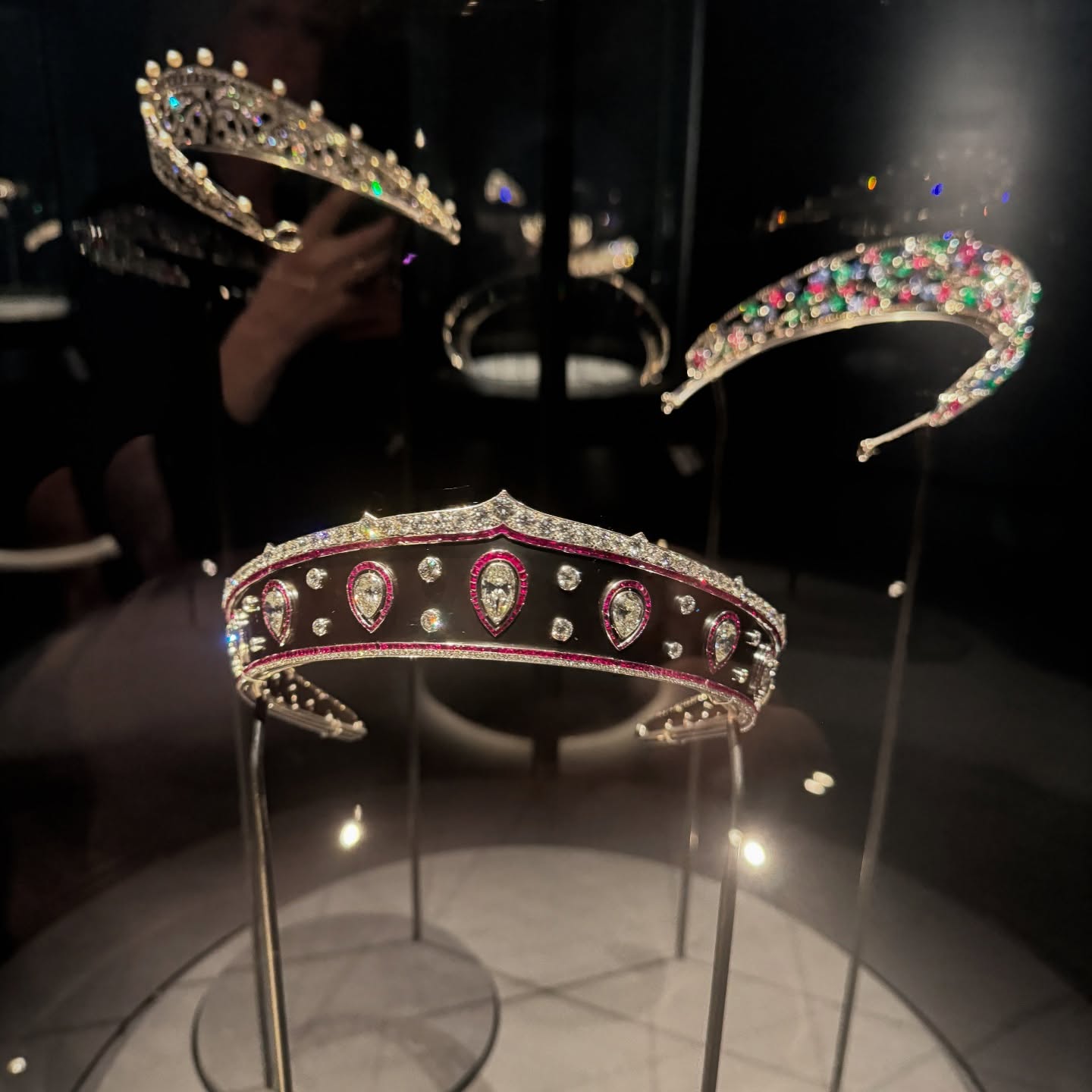
Fantastic opening evening @vamuseum for the Cartier exhibition last night. Overwhelming amount of glittering creations on display, particularly from those glory years in the early 20th century when jewels were de rigeur and a night out in high society required a glittering tiara (wouldn't that be fun?)
The curators @helenmolesworth and @rgarrahan take the visitor on a journey through multiple bejeweled themes – from the origins of the Cartier style and choice of gemstones, to royal clients and rare watches.
Walking through the many rooms really highlights the staggering breadth and depth of Cartier's craftmanship: from brooches, bandeaus and mystery clocks, to objets d'art, vanity cases and maharaja's necklaces. A fair amount of stardust glitter too, with pieces that belonged to Grace Kelly, Elizabeth Taylor, Jackie Kennedy and even a watch lent by @feliciathegoat today.
A highlight was seeing pieces alongside original designs and sources of inspiration that bring to life the creative process. A reminder that while these glorious jewels may end up on the red carpet, they were born from hard-working beginnings: raw talent nurtured over many years and that ceaseless quest for originality: 'never copy, only create'.
More later - back there tonight! - but a few photos to give a sense in the meantime (and a little video that it was quite emotional to see of my grandfather showing Prince Philip around 175 New Bond Street back in the day).
Tiaras on display at the V&A Cartier exhibition


!
#Cartier #VandA #JewelryHistory #luxurycraftsmanship
Another fabulous Cartier jewel spotted in Washington — a 4-stranded natural pearl necklace made for Marjorie Merriweather Post in 1936, with the most jaw-dropping diamond back.
1 min read
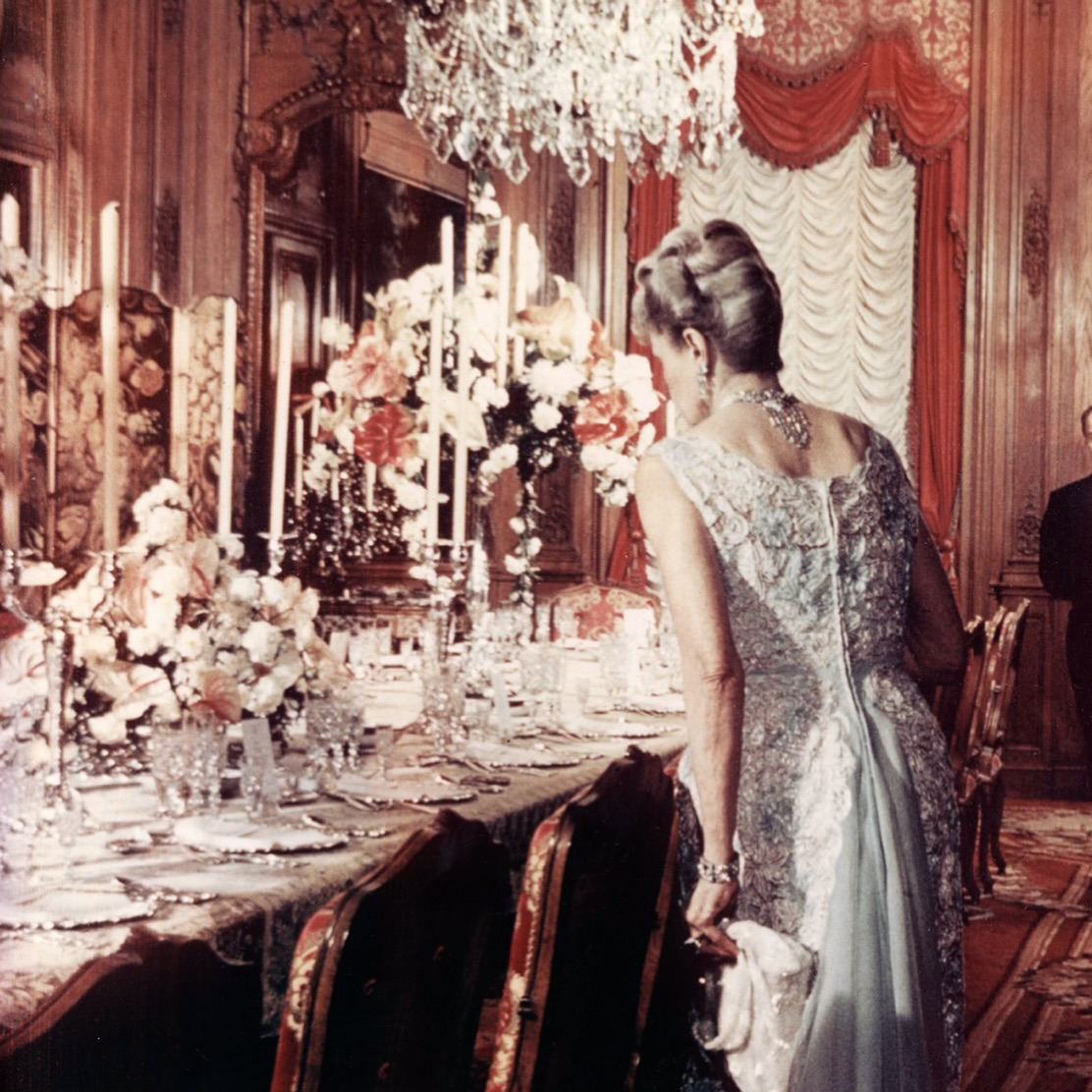
Another fabulous jewel spotted in Washington this month. This one was made for one of Cartier's best American clients, Marjorie Merriweather Post, in the 1930s when the fashion was for wearing low-backed evening gowns with a fabulous back drop necklace. In this case the 4-stranded natural pearl necklace made by Cartier New York in 1936 had the most jaw-dropping diamond back. Love it. You can see how it was worn by Post at one of her famous Hillwood dinner parties in the second image.
In the 1960s Post had this necklace altered, changing the natural pearls for cultured pearls. Not sure why, perhaps she had the natural pearls made into other necklaces for her daughters.
Having written about this piece in my book, it was really special to see it close up at the Fragile Beauty exhibition @hillwoodmuseum, thank you to super-knowledgeable curator @wzeisler for showing me around. Really recommend checking out the exhibition if you're anywhere near Washington – it's all about the wonders of the sea so includes some fantastic pearls, among other wonderful pieces. Also such fun to wander around Hillwood (Post's Washington residence), feels like stepping back in time to a very glamorous age.
And any thoughts on this necklace? Think we should bring back the whole back necklace vibe?
Cartier natural pearl necklace detail


!
Always fun to see the Hope Diamond at the Smithsonian — one of those research stories where reality seemed more like fiction, involving this enormous supposedly cursed blue diamond and the unusual sales techniques Pierre Cartier had to employ.
1 min read
Just back from Washington. Always fun to see the #hopediamond @smithsonian. Was briefly in my family a few generations back when Pierre Cartier bought it and had it reset into a necklace that delighted Evalyn Walsh McLean. One of those stories I researched for my book where reality seemed more like fiction…involving this enormous supposedly cursed blue diamond with a notorious past, the unusual sales techniques Pierre had to employ to sell the necklace, a Great Dane dog who wore it around its neck, a lawsuit that was terrible for Cartier and a tale of dramatic lightening marking the moment when the stone was blessed in church.
As always, wonderful to see it close up, as well as so many other glorious jewels in the @smithsoniannmnh

Natural pearls were once the most valuable gems in the world, and the Cartiers built much of their early reputation on them. A summary of the Hillwood estate webinar with Francesca Cartier Brickell.
3 min readIn a lecture hosted at the Hillwood estate in Washington DC, Francesca Cartier Brickell traced the Cartier family's deep involvement with natural pearls: from the height of the pearl trade in the early twentieth century to its collapse, and the pieces that survive as evidence of what was lost.
The full webinar is available to watch at The Cartiers and their Pearls.
Francesca opened by describing how the subject arrived for her through family photographs. Her great-great-grandmother, along with almost every woman in the family photographs from that era, was wearing pearls. "It struck me," she noted, "how central pearls were to the world these people lived in."
Before the cultured pearl industry was established in the early twentieth century, natural pearls were among the most valuable objects in existence. Their value lay entirely in scarcity and chance: a natural pearl required an oyster to form a protective layer around an irritant over several years, with no intervention possible. Two matching pearls of similar size, colour, and lustre were extraordinarily rare. A perfectly matched double strand was rarer still.
The rediscovery of pearl-rich waters in the Caribbean, financed by Spain during its expansion into the Americas in the sixteenth century, triggered what historians call the Pearl Age. Enormous quantities of pearls entered Europe from the new world. The Patagonian Pearl was among the most celebrated finds of this period, its journey through various hands illustrating how these objects moved between cultures, collections, and owners over centuries.
By the late nineteenth century, the primary sources were the Persian Gulf, Ceylon (Sri Lanka), and the coasts of Venezuela. Jacques Cartier made several trips to Bahrain and India specifically to buy pearls at source, developing direct relationships with the trading families who controlled supply. His letters from these journeys, preserved in the family archive, describe the process of selection and the prices involved.
The Cartiers operated in the pearl trade at several levels simultaneously. They bought unstrung pearls from dealers and pearl divers, they restrung and remounted pieces acquired from estate sales, and they sold complete necklaces to clients as finished jewellery. Madame Rico, a specialist pearl stringer who worked with Cartier Paris, was responsible for assembling the firm's most important necklaces, a job requiring years of experience to match stones by colour, size, and lustre across a complete strand.
Pierre Cartier built Cartier New York's early reputation substantially on pearls. The most famous transaction in this history involved Morton Plant, whose double-stranded pearl necklace was considered one of the finest in the world. Plant owned a townhouse on Fifth Avenue at what is now 653 Fifth Avenue, a prime location. Pierre saw an opportunity: he proposed a trade. The necklace, valued at one million dollars, for the townhouse. The exchange was made in 1917, and Cartier New York moved into what became its permanent address.
The development of cultured pearl technology in Japan changed the economics of the pearl market irreversibly. By the 1930s, cultured pearls were entering the market in quantity, indistinguishable to the eye from natural pearls. The value of natural pearl necklaces collapsed. Pieces that had sold for hundreds of thousands of dollars were remounted, restruck, or broken up. Many of the great necklaces of the Belle Epoque and Edwardian period were dispersed in this period.
The Cartiers adapted, as they had through previous upheavals, but the scale of their pearl operation in the 1900s and 1910s was never replicated. What survives is partly in the pieces themselves, partly in the records Jacques left of his travels, and partly in the auction history of necklaces that passed through the firm's hands.
The Cartiers and their Pearls was recorded at Hillwood estate, Museum and Gardens, Washington DC, as part of a series linked to the exhibition Fragile Beauty: Art of the Ocean.
Watch the full webinar: The Cartiers and their Pearls
A few months ago, I set out to retrace my great-grandfather's footsteps in the Middle East.
4 min read
A few months ago, I set out to retrace my great-grandfather's footsteps in the Middle East. With no real sense of what to expect (after all this was 100-odd years later), I hoped to wander the same streets, search for pearls as he had done and - a long-held dream - meet descendants of the pearl merchants who sat with a very dapper Jacques Cartier for the B&W photograph on my study wall. What I didn't envisage was how the trip - and those I met - would impact me personally, and certainly not that it would make it into the newspapers, onto TV and even lead to a record-speed Arabic-edition of The Cartiers (to be launched at the Abu Dhabi Book Festival next week no less!)
The Bahrain I initially experienced felt a world apart from the one Jacques had described in his diaries. In the place of desert and donkeys were busy roads and skyscrapers (although we did eventually find a donkey!). Only the deep blue sea was a constant. Like Jacques, I went on a boat in search of pearls but unlike him, I tried the diving myself: first in the shallows with a mask and snorkel and later, deeper in the ocean with scuba gear (had to overcome my fear of deep sea diving for this one!). Any shells I found I placed in the net I carried – a process that hasn't changed much in the last century.
Back on the boat, I was shown how to look for a pearl within its shell, prying it open with a wide blunt knife and gently extracting the gem from its jelly-like home within. Jacques talked about spending a whole morning on the boat and not finding a single pearl of note. We found a few but they were tiny. Later, at Jewellery Arabia, I saw many more, falling in love with this exquisite pearl scarf (below) by Mattar Jewelers, a family business whose ancestors Jacques had met 112 years earlier on his hunt for natural pearls.
On my last night, a dinner had been arranged by DANAT (the Bahrain Institute for Pearls and Gemstones), to introduce some of the descendants of the pearl merchants Jacques had known. Over drinks, I met those who would later recreate a photo with me, along with their families. It was emotional - more than I had anticipated. I am lucky to give quite a few talks all over the world, but when I was asked to say a few words in front of these welcoming faces under the Arabian stars, I felt overwhelmed. It was hard to find the words to express how I felt: that the threads of history I'd been trying to understand and track down for so long were, at that very moment, reunited again.
Benches had been set up to replicate those in the original photograph, and the five of us took up our positions (literally trying to mimic the exact leg crossing as our ancestors). But then we realised it wasn't quite right – I was missing the cigarette Jacques had in the photo, someone else was missing the walking stick, the right scarf... cue much activity as helpful people in the watching crowd went off to look for the items. I was quite glad for the time as it gave us five a chance to chat, to laugh, and to acknowledge that jolt of connection. We may not have known our great-grandfathers in person but by sitting here, in the same country they had sat, sharing stories with each other, we were bringing their history – and the links they had made – back to life. There's something powerful about that.
I set out to research the history but I didn't anticipate how much the experience might enrich my present. I had wanted to track down the buildings and motifs Jacques had photographed, to better understand the pearl process and the sources of inspiration he found in the Middle East. Some things I found, others I didn't, but perhaps I share my great-grandfather's globe-trotting gene because I loved it all. In Oman, I visited the desert, and was overwhelmed by its vastness, the sense of calm, the way it hadn't changed for so long. In his diary, Jacques had spoken about meeting the Sultan, "a charming man and very enlightened", in Muscat in 1912. A century or so later, also in Muscat, against the stunning mountainous backdrop and setting sun at the Shangri La, I gave a talk with HH Princess Basma Al Said, the brilliant founder of Oman's first mental health clinic, about the history of our ancestors.
Next week, against the odds, I will be launching 'The Cartiers' Arabic-language edition in Abu Dhabi and Dubai. One always learns things with the foreign editions: this experience was incredibly fast paced and led to some fascinating exchanges with the translators (it's rare for anyone to read your words so closely). I also learnt how lucky I was to have this opportunity as not many books are translated into Arabic (a 2003 UN study estimated that only c. 10,000 books had been translated into Arabic in the past millennium!). My publisher, Kalima, an initiative of the Tourism and Culture Authority, was set up in 2007 to change that: its impact has already been felt: 20 years ago, only c. 300 books a year were translated into Arabic, now it's closer to 10x that figure.


It was enlightening — in more ways than one — to attend Watches & Wonders in Geneva last month.
5 min read
It was enlightening — in more ways than one — to attend Watches & Wonders in Geneva last month. Focused on high-end luxury watchmaking, this trade show has been running for over three decades, although originally in a much smaller format with a different name (it was called SIHH until 2020).
This year it hosted 48 Maisons, and attracted not only the industry press, influencers and the odd star brand ambassador (Julia Roberts, David Beckham, Roger Federer to name a few) but also enough CEOs from rival world-renowned luxury brands to warrant a CEO-only restaurant inside.
I don't fall into any of these categories, but for my next project I'm researching the history of watchmaking, and for the industry today, this is the one event they all seem to care about. I wanted to understand why — so when the opportunity to attend arose, I jumped at it.
Situated in what feels like an enormous car park from the outside (nestled between the airport, a motorway and an Ibis hotel), the Palexpo exhibition centre gives far from a glam first impression. And yet for one week, this giant space has been transformed to evoke a sense of calm luxury from the moment you step inside: smiling beige-suited staff in bright white trainers on hand to help with any enquiry, champagne on tap, and lots and lots of luxury watches.

From an industrial-feeling entrance to Hollywood glamour in 60 seconds — as Julia Roberts draws the crowds.
As you'd expect, there's high security. The electronic entry gate displays your pre-registered ID photo on a screen (so no borrowing someone else's pass!), but once through the airport-style x-ray machines, it suddenly feels other-worldly.
It's almost like wearing a VR headset and experiencing one of those virtual villages where brands are spending big bucks for best placement in the Metaverse. To the left is a large Rolex custom-built 'building', at the end is the familiar Chanel logo, Van Cleef is all exotic jungle-themed, Hermès has made the bold call not to display watches in its windows, and at Cartier you're greeted with a bridge luring you towards this year's Collection Privée release — a platinum-braceleted Tank Normale (fun to compare it with the original 1920s version on the wrist of one collector at the fair).

Flying sculptures at Hermès, Cartier's new Tank Normale, and crowds at Chanel.
Throughout the fair, wide camel-carpeted lanes are punctuated with bars and tables where you can order three courses efficiently served in glass bowls on a single tray (all free), and armchairs where you can sit and chat or just catch up on work. There's also a bookstore selling glossy watch books, a photo booth and a large auditorium.
I went to a few of the talks: keynotes by major brands about new launches, sometimes with added star attraction (Julia Roberts drew large crowds when she appeared on the panel at Chopard, while Ryan Gosling featured in a short film trailer at Tag Heuer).

Insta-ready at the entrance, and Tag Heuer's snazzy re-launch of the Carrera.
There was a session on sustainability in the watch and jewellery industry with senior representation from Cartier (Cyrille Vigneron), Chanel (Frédéric Grangié) and Kering (Marie-Claire Daveu) and the Watch and Jewelry Initiative 2023 (Iris Van der Veken). There was also an inauguration talk where Jean Frédéric Dufour (W&W Foundation/Rolex) and state council president Mauro Poggia shared insights on the challenges facing the industry today, before being joined by the various brand CEOs to formally open the event.

A lack of diversity at the top? CEOs on stage for the inauguration session.
It was a fascinating few days — plenty of takeaways. Here are three themes I noted.
1) Inclusivity vs. exclusivity: For what is essentially a high-end B2B and media marketing 'salon', it was interesting to see the different brand approaches to their stands — a sort of architectural embodiment of brand values. Some welcomed you in (at Jaeger-LeCoultre, it was possible to wander in, enjoy a watch-inspired cake at the café, have a chat with CEO Catherine Rénier, check out the history behind the older Reversos, and see modern watch specialists at work) while others wouldn't let you over the threshold without an appointment ("But you can look at our watches from the windows outside," I was told by one Maison). Needless to say, I preferred the more inclusive approach — and came out feeling I understood the ethos and craftsmanship behind the brand — though perhaps those with VIP appointments liked being in a more exclusive club.

Learning about how watches are tested under pressure at IWC, an other-worldly feel at Hublot, and watching the hand-enamelling process at Jaeger-LeCoultre.
2) Heritage vs. innovation: The common refrain from almost every brand was that their new products were simultaneously deeply rooted in heritage while also being incredibly innovative — and somehow more so than ever before. There wasn't much room for understatement, nor much acknowledgement of the possible tension between these two aspects. On the innovation side, I would have liked to hear more about sustainability in terms of actual concrete targets — a topic that deserves more air time in today's world.
3) Industry challenges: For an industry that still appears to be booming (brands spending a couple of million just to be present at W&W), there seemed to be an undercurrent of concern that it risks becoming irrelevant in an age where millennials check their screens for the time. The message from the W&W chairman was that brands need to stick together, and to keep talking about new products and savoir-faire at events like this, to avoid 'losing traction.' Watches, he noted, are "an instrument for dreaming" — and that dream needs to be maintained, or people will spend their money elsewhere.

Old and new: a couple of Cartier ovals/baignoires made 50 years apart, a 1949 JLC Reverso depicting King Rama, and the Tag Heuer Carrera then and now.
All in all, a worthwhile — and fun — week. It's also an event where those with a common interest come together, and it was lovely to see a few friends and meet others in the flesh for the first time (beats social media messaging). With my interest in the history, I also enjoyed seeing the older pieces that some brands chose to display alongside their new models — it was fun to compare a 50-year-old London oval watch made under my grandfather, Jean-Jacques Cartier, with Cartier's newest oval/baignoire on a gold bracelet.

Sharing stories with collectors and influencers in Geneva, the city of watches.
For a trade show that has been called "easily the single most un-democratic event the watch industry hosts" (Jack Forster, Hodinkee), I thought it was great that this year the 'salon' opened to the public for the final couple of days, and also that W&W spread into Geneva, with various talks and tours across the city throughout the week. It made it feel more inclusive. After all, as you wander around Geneva, you realise it really is a city made from watches: so many of the brand names on the buildings each side of the lake are those of old watchmakers, many now owned by their large conglomerate heirs, but still going strong, still working every day to keep that dream alive.

Following in my great-grandfather's footsteps on the hunt for pearls in Bahrain.
Next up, I'll be writing up my recent trip to the Middle East in search of pearls. And I'm also planning the next webinar for June to coincide with the upcoming Arabic launch of my book — watch this space!
Had an unexpectedly fascinating experience recently. Visiting a watchmaker to discuss antique Cartier watches, we ended up taking apart a few of them.
2 min read
Had an unexpectedly fascinating experience recently. Visiting a watchmaker to discuss antique Cartier watches, we ended up taking apart a few of them. Suddenly these inanimate objects sprung to life.
Like precious jewels, old watches have their own stories and while one can do all kinds of research from the outside (did it perhaps keep time for a French Count in the Belle Epoque or a British rock star in the swinging sixties?), as a watch specialist once said to me, you don’t really know where you are with a vintage watch until you open up the case.So what’s inside?
To start with, clues to those who brought it to life, or back to life: watchmakers sometimes engraved their initials and with a bit of sleuth work it can be possible to figure out if it was the strict head watchmaker in London or a nervous young apprentice in Paris who slaved over it many decades ago (love this part – sends me down endless rabbit holes into past lives).Other marks reveal different secrets: numbers and symbols are sometimes as expected, other times they suggest a fake or a ‘Frankenstein’ watch (created from several different watches).
In this case (pun not intended), we literally jumped in the air to discover a faded maker’s mark (an E J and hourglass), suggesting the watch was made in Edmond Jaeger's workshop at a time when the great man himself -pictured here-was still alive and running the show (I'm fascinated by Jaeger and his relationship with Louis Cartier – two creative geniuses -more on their alliance in #thecartiersbook ).Then there’s the movement (2nd image), the beating heart still ticking even when removed from its case.
Often with old watches, the #watchmovement has been repaired or replaced over the years but opening this early #cartiertonneau revealed the original movement within.
I found it rather beautiful, and it got me thinking too…wondering about the young man it faithfully kept time for as minutes turned into hours and months and years…a constant companion through highs and lows and changing eras.So much more to share.
Have been surprised many times over the past few months while hunting for the real human stories behind old watches. More to come!
What an incredible trip to the land of pearls. Almost seems surreal.
1 min read
What an incredible trip to the land of pearls. Almost seems surreal. Having read and studied Jacques' diaries for years, it was mind-blowing to bring it all to colourful, sensory life by following in his footsteps, and to experience that same sense of wonder he had felt when disembarking from the boat in Bahrain for the first time over a century ago. So many wonderful stories and images to share, but first, to set the pearl scene, here's a jaw-dropping piece.
When you consider how long it takes to find enough natural pearls that match in size/tone/shape for a just single stranded necklace (my grandfather told me it wasn't unusual for Cartier to wait at least a decade to create a natural pearl necklace), it really is extraordinary to witness one of this size. 18 strands no less..
Even more special was being shown this necklace by the Mattars @mattarjewelers, a family that my great-grandfather had first met back in 1912. Back then, he'd been trying to better understand the pearl trade in the region, and buy some pearls to take back to his Cartier branch in London, and to his brothers in Paris and New York, so he'd met with several pearl merchants.
It's hard to overestimate how important #naturalpearls were for #thecartiers back then. As the most expensive gem on the planet, #pearls were incredibly sought after and the discovery of a perfect pearl could upset financial markets globally. As #paulclaudel, the French writer and diplomat (who became linked to the Cartiers through the marriage of his son, Pierre to Marion Cartier) noted, in the early 20th century, whenever a perfect natural pearl was found "their appearance on the market depresses all other values. It alters rates of exchange and causes considerable alarm, since they feel their operational stability is under threat, once a new and unquantifiable element has been introduced."
All of which makes the number of pearls I saw in Bahrain quite incredible.


One hundred and ten years ago, Jacques Cartier arrived in Bahrain for the first time. Writing home to his brother Louis, he described his mission: to investigate the pearl market and find the most effective way to purchase pearls.
2 min read
One hundred and ten years ago, Jacques Cartier arrived in Bahrain for the first time. He wrote home to his brother:
"My dear Louis, if I have understood correctly, the most important mission bestowed on me during this trip to the East is to investigate the pearl market and to report back on the most effective way for us to purchase pearls."
As Cartier was well aware, natural pearls were like magnets for the wealthiest women in the world. Since the opening up of the South African diamond mines, the price of pearls had soared compared to diamonds based on their relative rarity.
In the early 20th century, a good-quality pearl — valued more for its round shape than its sheen — was priced four times more highly than a diamond of the same weight, and a pearl necklace could be more expensive than a Rembrandt painting. Perfect natural pearls were almost impossible to find, but the best, the Cartiers believed, came from the Gulf.

Jacques Cartier in Bahrain, 1912.
The problem was that the Cartiers were a bit late to the scene. Another group of jeweller brothers, the Rosenthals, had already gained the pearl sheikhs' trust via a very clever trick involving thousands of gold coins and several donkeys. As the only European firm permitted to buy pearls directly from the source, the Rosenthals had grown extraordinarily wealthy — and the Cartiers, fed up with looking on from the sidelines, wanted a share of the action too.

Pages from Jacques Cartier's travel diaries.
Next week, I'll be following in my great-grandfather's footsteps, using his travel diaries as a guide. I imagine communication will be easier this time round. Jacques wrote: "The conversation wasn't very fast because I gave my message in English, the translator translated it into Hindustani, while amplifying it slightly, and then Sheikh Youssef translated it into Arabic for the head sheikh, also adding his own comments. In this way, a discussion of 50 words took half an hour. And then the response came by the same chain, so the exchange went on for quite a while!"
For those in the area, I'll be speaking and signing books in Oman and Bahrain — and hoping to re-enact some photos from Jacques' albums. Watch this space!
One of my favourite stories from the early days of Cartier in 13 Rue de la Paix is the one I unexpectedly discovered about Madame Ricaud, the first wo...
1 min read
One of my favourite stories from the early days of Cartier in 13 Rue de la Paix is the one I unexpectedly discovered about Madame Ricaud, the first woman to work in the building.
She was a pearl stringer – and a good one at that – but the boss, Alfred Cartier (my g-g-gfather, in the picture on the right), was of the old-fashioned view that female employees shouldn’t be in the same workplace as the men so decreed she should work in the Cartier office over the road instead.
It may have made little practical sense but the reputationally-conscious Alfred insisted and his word was final.
At least, that was, until his eldest son Louis (on the left), new to the firm and not known for following the status quo, had another idea...Questioning the inefficiency of carting near-priceless pearls over the road to be strung and then back again in the form of necklaces, Louis, cleared a little room under the stairs in 13 rue de la Paix (essentially a broom cupboard), and suggested to Madame Ricaud that she might prefer to work there.
Knowing his father would not like the idea, he proposed they keep it secret from him. All went to plan until one day when Madame Ricaud grew thirsty and left her little room in search of some water.
Alfred, who happened to be in the building at the time, was shocked to hear the rustle of skirts and followed the noise until he came face to face with a terrified Madame Ricaud...Needless to say, an almighty row between father and son ensued.
Alfred may have been the boss but #louiscartier , still smarting from being forced into an unhappy marriage for the good of the business, was not prepared to keep conceding to his father. Especially not when he believed he was right. Sometime later, Madame Ricaud was told that she could stay.
Louis had won the battle and #13ruedelapaix had its first female employee !#cartierparis #pearlnecklaces #cartierpearls #cartiernecklace #fatherandson #cartierhistory #thecartiersbook
If someone had told me a few years ago that my book would be in both Le Monde and Le Figaro in the same week, I would never have believed it.
1 min read
If someone had told me a few years ago that my book would be in both Le Monde and Le Figaro in the same week, I would never have believed it. So amazing to open the paper while in France — tarte aux apricots in hand — and see this.
Many thanks to the journalist for the interview — it was really fun chatting away over imaginary tea (talking so much, we never got round to ordering it!) while I was in a gloriously sunny Paris a couple of weeks ago for the first French book launch.
We talked about everything from family background and an absence of tiaras, to how and why I left my job in the city to travel all over the world searching for bits of the puzzle of the past, to why it took so long after the English edition for Les Cartier to finally be published in the country where the story all started. (The short version: I was first told that if I wanted to publish in French, it would have to be 40% shorter because the French didn't like longer books.)
Needless to say, I refused — it didn't make any sense to me and I couldn't even begin to envisage cutting that much of the history — and I'm so glad I waited because the perfect publisher came along in the end. Huge thanks to Les Arènes and Five Continents Editions for believing in the book just the way I had written it.
In fact, for Les Cartier we even squeezed in a few more Paris-related stories and images. Next up on the book tour is Switzerland — looking forward to maybe seeing some of you in Geneva.
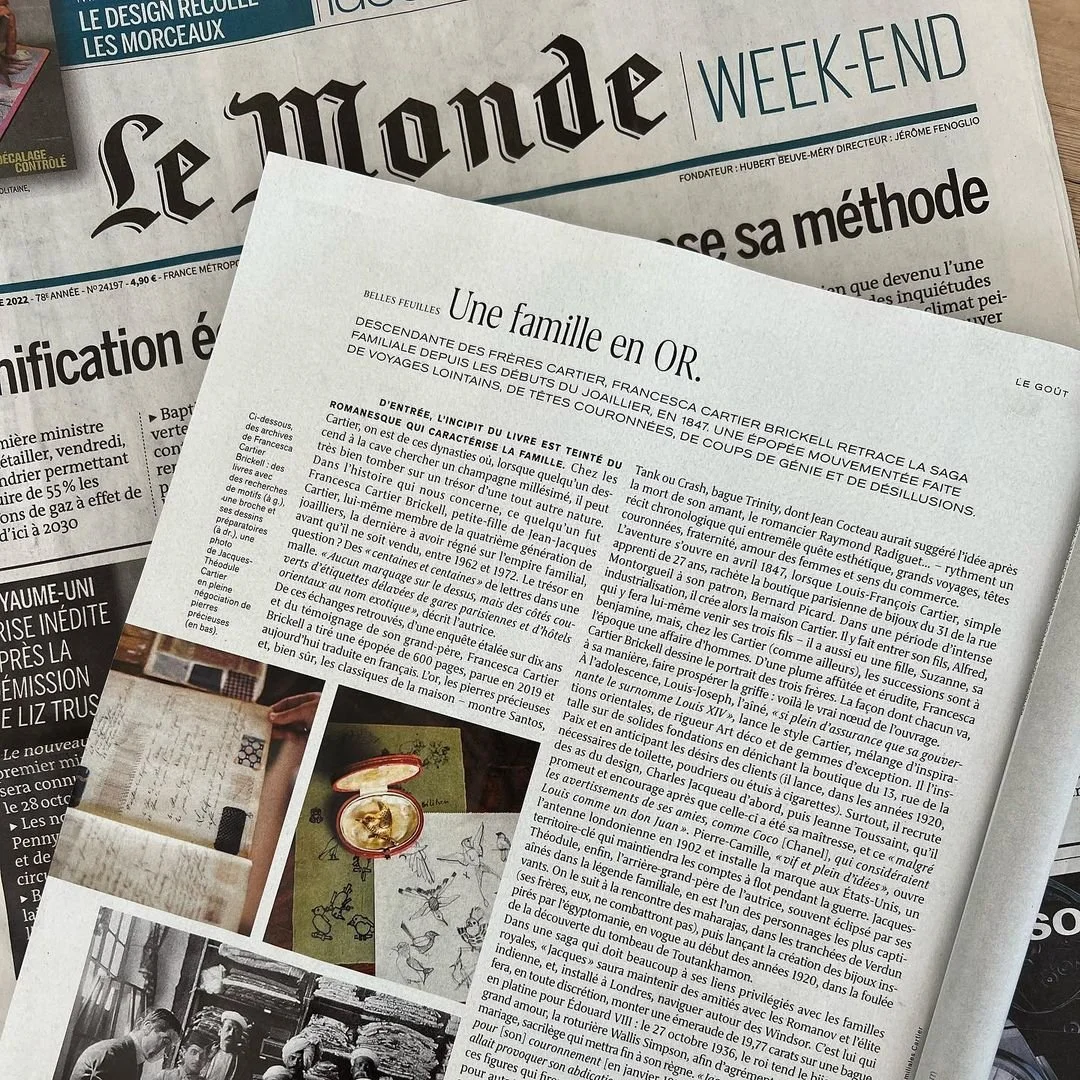
Super exciting to open Le Monde this weekend and discover this full-page review of Les Cartier (2nd image)!
1 min read
Super exciting to open Le Monde this weekend and discover this full-page review of Les Cartier (2nd image)! Really wasn't expecting this coverage — the best possible surprise after an exhausting and wonderful week in Paris launching the French edition of the book.
Thank you to Valentin Perez for this thoughtful review, highlighting the focus on the family story, the insight into the three very different brothers and some of the previously unexplored elements of the firm's history — like how Cartier Paris survived German occupation, and the complex nature of Jeanne Toussaint and her role.
And thank you to all of you I met in Paris this week at the various launches and signings for coming along. This French version is obviously particularly important to me given it's where the story of my family and Cartier all started — so it meant a lot. Hope you enjoy it!
C'était génial d'ouvrir Le Monde ce matin et de découvrir cette pleine page de critique sur Les Cartier ! Je ne m'attendais vraiment pas à cette couverture — la meilleure surprise possible après une semaine épuisante et merveilleuse à Paris pour le lancement de la version française du livre.
Merci à Valentin Perez pour cette critique réfléchie, qui met l'accent sur l'histoire de la famille, sur les trois frères très différents et sur certains éléments jusqu'alors inexplorés de l'histoire de la firme (comme la façon dont Cartier, 13 rue de la Paix, a survécu à l'occupation allemande et la nature complexe de Jeanne Toussaint et son rôle dans l'histoire).
Et merci à tous ceux que j'ai rencontrés à Paris cette semaine lors des différents lancements et dédicaces d'être venus — cette version française est évidemment particulièrement importante pour moi, car c'est là que l'histoire des Cartier a commencé. J'espère que vous l'apprécierez !
!
Launching Les Cartier in Paris 📕#lescartier #thecartiers #cartierparis #cartier #cartierfamily #cartierjewelry #artcurial #paris
1 min read
Launching Les Cartier in Paris 📕
#lescartier #thecartiers #cartierparis #cartier #cartierfamily #cartierjewelry #artcurial #paris
La première critique de Les Cartier est sortie aujourd'hui dans Madame Figaro — et j'en suis ravie.
1 min read
La première critique de Les Cartier est sortie aujourd'hui dans Madame Figaro — et j'en suis ravie.
J'ai été particulièrement touchée par la conclusion, qui fait référence aux conversations que j'ai eues avec mon grand-père : « J'espère seulement que ce récit transmettra une fraction de l'émerveillement que je ressentais lorsque j'écoutais mon défunt grand-père faire revivre les hauts et les bas d'une époque très différente. » Pari réussi, selon les mots du journaliste.
Cela signifie beaucoup pour moi que cette histoire — qui a évidemment commencé en France — soit enfin publiée en français. La date officielle de parution est le 20 octobre. Merci à tous ceux qui m'ont soutenu et qui ont été si patients en attendant cette édition. Je suis ravie de pouvoir enfin partager avec vous les histoires humaines qui se cachent derrière ces bijoux.
The first review of the French edition came out today in Madame Figaro, and I'm so pleased the reviewer enjoyed the book. I've included a few short extracts from the article in the images above.
It means a great deal to have this story — which obviously all began in France — finally published in French. The official release date is 20th October. Thank you to everyone who has been so supportive and patient waiting for this edition. I'm genuinely thrilled to be able to share the human stories behind the jewels with French-speaking readers at last.


A little piece of beauty for the weekend. It’s started off as a very wet one over here so thought we could do with some of that Indian-sunshine inspir...
1 min read
A little piece of beauty for the weekend. It’s started off as a very wet one over here so thought we could do with some of that Indian-sunshine inspiration that Jacques Cartier brought back from his trips to the East.
Wonderful mix of bold colours and Persian motifs here - and such attention to detail all the way through from the designs to the end product.
Multiple craftsmen would have taken such care to ensure every part was absolutely perfect- ‘it took as long as it took’ one of them told me once, ‘you couldn’t rush work like that.’ An adornment, yes (am envisaging this being the cherry on the cake of a very stylish 1930s outfit) but also a small work of art that still has the power to lift the spirits.
At least I think so, what about you?#cartierartdeco #jewelryasart #indianinspiration#jewelleryisart #1930sjewelry #jewelrydesigns
In 1904, when the 29-year-old Louis Cartier sat — or rather proudly reclined — for this sketch by the well-known artist Emile Friant, he was on his way up...
1 min read
In 1904, when the 29-year-old Louis Cartier sat — or rather proudly reclined — for this sketch by the well-known artist Emile Friant, he was on his way up in the world.
When he had joined his father Alfred in the family business a few years earlier, Cartier had been a little-known local jeweller selling all manner of jewels, timepieces and curiosities bought in from external workshops.
Since then, Louis had been busy: first, he had agreed (albeit reluctantly) to a financially rewarding arranged marriage with the granddaughter of the most famous fashion designer in the world; next, he had helped relocate Cartier to the prestigious Rue de la Paix (thanks in no small part to that unhappy but strategically successful marriage — it is no coincidence that his in-laws' Maison Worth was just a couple of doors down); and thirdly, he had introduced what he called "the flattering Cartier Style."
"In the past, the jeweller's art consisted only in assembling beautiful stones," explained Louis. "We wanted to return to the earlier traditions and give the jewellery a more artistic character, while at the same time modernising it."
This unique style, along with his experiments using platinum as a mount for diamonds, would revolutionise the jewellery world. It would also set Cartier apart from its peers in the eyes of some of the best clients in the world. No wonder Louis is looking ever so slightly smug: "Creatively he was a genius," my grandfather recalled of his uncle.
"But he didn't lack confidence, let's put it that way!"
More about the brilliant, complicated, often infuriating but much-loved Louis can be found in the book.


Fun - and rather surreal - for this to land on the doorstep!
1 min readFun - and rather surreal - for this to land on the doorstep!#thecartiers #tankchinoise #cartierfamily #cartiercollection #cartierjewelry #vintagecartier #jewellerydesign #jewelryhistory


Start typing to search across all content
Try searching for pearls, British Crown, or mystery clocks