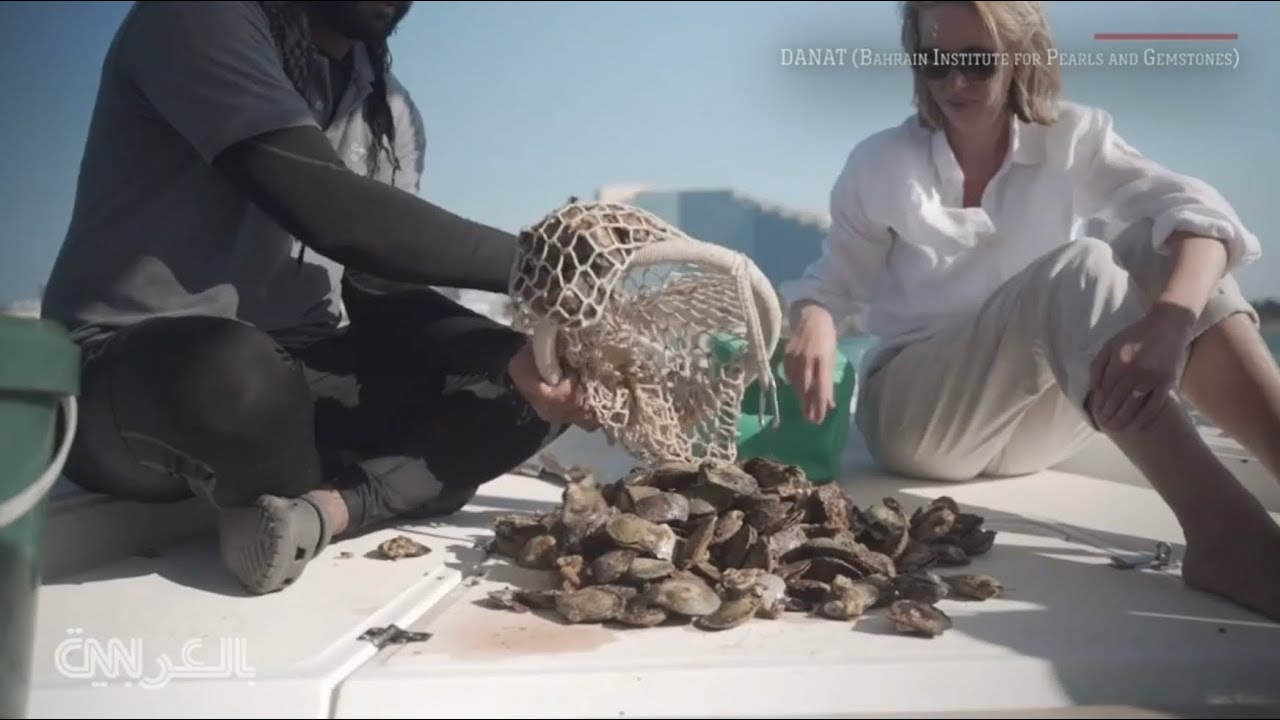
A natural pearl is a pearl formed entirely without human intervention inside a living mollusc (typically a saltwater oyster of the Pinctada family) as a response to an irritant that has entered the shell. The mollusc deposits successive layers of nacre (mother-of-pearl) around the irritant over months or years, producing the rounded, lustrous object that has been prized in jewellery since antiquity.
Natural pearls can be distinguished from cultured pearls, which have been produced commercially since the early twentieth century. In a cultured pearl, a human technician implants a nucleus (typically a bead of shell) into the mollusc, stimulating the nacre deposition process. The resulting pearl is grown by the oyster but initiated by human intervention. Because cultured pearls can be produced in large quantities on pearl farms, they have replaced natural pearls almost entirely in the commercial market and are now the standard for all but the finest jewellery.
Before the widespread introduction of cultured pearls in the 1920s and 1930s, natural pearls, harvested from wild oyster beds principally in the Persian Gulf, the Gulf of Mannar, and parts of the Pacific, were among the most valuable materials in jewellery. A matched necklace of large, perfectly round natural pearls could command a price equivalent to an important diamond necklace or a significant building; the most celebrated example is the double-strand necklace that Pierre Cartier traded for the Morton Plant mansion, the transaction that gave Maisie Plant her coveted pearls and Cartier its Fifth Avenue address. Cartier was deeply involved in the pearl trade, with clients including Marjorie Merriweather Post, for whom the firm created a four-strand natural pearl necklace in 1936. The history of how the firm sourced, traded, and set natural pearls is explored in The Cartiers and the Pearl Market and across the webinar series.
Today, natural pearls are rare and highly valued. Laboratory testing can distinguish between the two: the nacre layers of a natural pearl extend to the centre, while a cultured pearl shows a distinct nucleus on X-ray. This distinction matters in the current market, where the two are not always clearly differentiated.
Sources
- Francesca Cartier Brickell, The Cartiers (Ballantine Books, 2019)
- Hans Nadelhoffer, Cartier: Jewelers Extraordinary (Thames and Hudson, 1984; revised 2007), pp. 39, 134 et al.