
Vintage Cartier Glossary: From Haute Joaillerie to Horology
A reference covering the key terminology of vintage Cartier jewellery, watches, and the family behind them — from haute joaillerie to horology — for researchers, collectors, and lovers of the history.
217 Terms
The Cartier Family11


Browse by Topic
The full scope of Cartier's timekeeping: from the Santos and the Tank to the mystery clocks of Maurice Couet. Watches, clocks, and the craftsmen who made them.
From the Santos commission for Santos-Dumont to the Tank, the Crash, and the Tonneau. The wristwatches that defined Cartier's horological identity.
The mystery clocks of Maurice Couet, comet clocks, prism clocks, and Belle Epoque enamel desk clocks. Cartier's extraordinary clock output.
The Trinity Ring, Tutti Frutti, the great tiaras and commissions. Cartier's jewellery and its most celebrated individual pieces.
The maharajas, royals and socialites whose commissions shaped Cartier's greatest work. From the Delhi Durbar to Hollywood.
Art Deco, Belle Epoque, Garland Style, Egyptian Revival and Persian influence. The aesthetic movements and historic events that shaped Cartier's visual language.
Guilloche, mystery settings, millegrain, enamel and platinum. The craft and materials behind Cartier's work.
The designers, goldsmiths and creative partners who built the house: Jeanne Toussaint, Charles Jacqueau, Edmond Jaeger and others.
Paris, London and New York. The three branches of Cartier, their addresses, and the craftsmen who supplied them.
Browse the full index across watches, jewellery, people and history.
Notable Clients & Wearers52


- King George V
- Lady Cunard
- Lady Granard
- Maharaja of Kapurthala
- Maharaja of Nawanagar
- Maharaja of Patiala
- Maisie Plant
- Maria Callas
- María Félix
- Marjorie Merriweather Post
- Marlene Dietrich
- Morton Plant
- Mrs Greville
- Nizam of Hyderabad
- Princess Margaret
- Princess Marie Bonaparte
- Princess Marina, Duchess of Kent
- Queen Alexandra
- Queen Elizabeth II
- Queen Marie of Romania
- Queen Mary
- Richard Burton
- Sir Ernest Cassel
- Tsar Nicholas II
- Wallis Simpson
Watches25
- Baignoire An oval wristwatch whose name is French for 'bathtub.' Made in yellow gold, white gold, and platinum. Two principal case forms: the standard Baignoire and the dramatically elongated Allongée, also known as the Maxi Oval.
- Basculante A pivoting-case wristwatch introduced by Cartier in 1932, designed so the dial can be rotated face-down within its fixed outer frame for protection.
- Cartier Cintrée Cintrée A curved, elongated variant of the Tank wristwatch, introduced in 1921 and characterised by its slim bowed case that follows the contour of the wrist.
- Cloche A wristwatch in a bell-shaped case, produced primarily in the 1920s and closely associated with the Art Deco period and Louis Cartier's exploration of sculptural case forms.
- Crash The deliberately distorted asymmetric wristwatch produced by Cartier London from 1967, among the most sought-after vintage Cartier watches.
- Decagonal A ten-sided wristwatch case produced by Cartier London under Jean-Jacques Cartier at 175 New Bond Street in the 1960s and 1970s.
- Dice Watch A Cartier London novelty wristwatch in which four circular apertures at the corners of the square dial evoke the four-pip face of a dice.
- Domino Watch A Cartier novelty watch of the 1930s in which the case was shaped and decorated to evoke a domino playing piece, using black hard stone, ivory, and playing card imagery, promoted by Jeanne Toussaint at Deauville in 1939.
- Eclipse Watch A Cartier pocket watch format distinguished by a spring-loaded shutter mechanism that concealed the dial entirely when closed, opened by pressing the cabochon-set crown.
- Maxi Oval An elongated oval wristwatch case produced by Cartier London under Jean-Jacques Cartier in the 1960s and 1970s, related to the Baignoire and sharing the same oval vocabulary as the Crash.
- Octagonal An eight-sided wristwatch case produced by Cartier London under Jean-Jacques Cartier at 175 New Bond Street in the 1960s and 1970s.
- Octagonal Allongée An elongated octagonal wristwatch case produced by Cartier London under Jean-Jacques Cartier at 175 New Bond Street in the 1960s and 1970s.
- Pebble A rounded gold wristwatch made by Cartier London in the early 1970s under Jean-Jacques Cartier, rarer than the Crash and among the most sought-after vintage Cartier London pieces.
- Pocket Watch Before wristwatches became standard for men, Cartier produced some of the most refined pocket watches of the Belle Époque and Edwardian eras: open-face rounds, the Tonneau, the shutter-mechanism Eclipse, purse watches, and novelty forms including the Domino.
- Purse Watch Flat, rectangular or oval watch cases designed to be carried in an evening bag rather than a waistcoat pocket, a Cartier speciality of the 1920s and 1930s combining watchmaking with decorative case design.
- Reverso A reversible-case wristwatch designed by Jaeger-LeCoultre and retailed by Cartier, also known as the Cabriolet, with a case that pivots within its frame to expose a plain or engraved back face.
- Ronde The round-cased watches Cartier produced throughout the early and mid twentieth century, running as a quieter counterpart to the firm's celebrated geometric shapes. The name was formalised only later.
- Santos One of the earliest and most influential purpose-designed wristwatches, created for the Brazilian aviator Alberto Santos-Dumont.
- Tank The rectangular wristwatch inspired by the overhead view of a WWI tank, one of the most imitated watch designs in history.
- Tank à Guichet A Cartier Tank variant introduced in 1928 in which the traditional dial and hands are replaced by two aperture windows displaying the hours and minutes separately; one of the rarest and most architecturally distinctive of all Cartier timepieces.
- Tank Chinoise A Cartier wristwatch introduced in 1922 in which the Tank case was elaborated with horizontal bars over the vertical flanks, inspired by the architecture of Chinese temple porticos; among the rarest of the original Tank variants.
- Tonneau A watch case shape wider at the centre than at the ends, resembling a barrel, one of Cartier's classic case geometries.
- Tortue A curved rectangular case with convex sides that taper to the ends, named for its resemblance to a turtle's shell.
- Watches Cartier's wristwatch output from the early Santos through the geometric forms of the interwar period and the post-war designs of the London branch -- a history of shaped cases rather than mechanical complications.
- Deployment Clasp Déployante A folding gold strap fastener patented by Edmond Jaeger for Cartier's exclusive use in 1909, allowing wristwatch straps to open and close without removing the watch.
Horology12
- Animal Mystery ClockThe figural group of Cartier mystery clocks, with twelve variants produced between 1922 and 1931, incorporating carved animals, enamelled jade, and oriental forms.
- Calibre 101One of the smallest mechanical movements ever made, measuring just 14mm long, used in Cartier's most refined jewellery watches.
- ClocksFrom Belle Epoque enamel desk clocks to Art Deco architectural pieces, astronomical comet clocks to the mystery clocks with their floating hands -- Cartier's clock output reflects the same creative range as the jewellery.
- Comet ClockSemi-mystery desk clocks inspired by the passage of Halley's Comet in 1910, with diamond-set comet hands, rotating dials, and day-and-night indicators.
- Portique ClockAn architectural hardstone and gold clock produced by Cartier in only six examples between 1923 and 1925, among the rarest objects the firm ever made.
- Cartier Prism ClockA Cartier clock type from the 1930s, patented by Gaston Cusin, that uses internal mirrors and prisms inspired by the underwater periscope to reflect a hidden dial.
- Central Axis Mystery ClockThe second variant of Cartier mystery clock, using a single central axis mechanism. At least twenty-one variations were created from 1920 onwards.
- Jaeger-LeCoultreThe Swiss manufacture that supplied many of Cartier's finest watch movements, and maker of the Reverso, one of the landmark watch designs of the twentieth century.
- Minute RepeaterA horological complication that chimes the hours, quarter-hours, and minutes on demand; Cartier produced minute repeater watches from the early twentieth century, with the Tortue form yielding some of the most celebrated examples.
- Mystery ClockA clock in which the movement is hidden, so the hands appear to float and turn with no visible mechanism driving them.
- Model A Mystery ClockThe first of Cartier's mystery clock forms, with transparent rock crystal columns supporting a floating dial. Produced from 1912 through the late 1940s.
- Screen Mystery ClockA fire-screen-shaped mystery clock produced by Cartier in only seven examples between 1923 and 1928, also known as the Enseigne mystery clock.
Jewellery15
- Cartier Art Deco Tiaras Cartier's interwar tiara production, from the geometric bandeaux of the 1920s to the British royal commissions of the 1930s, reflecting changes in fashion, patronage, and workshop practice across two decades.
- Cartier Bird Brooches Two companion brooches from Cartier Paris during and after the German occupation of Paris: a caged bird in 1942 and a liberated bird in the national colours of France in 1944, both believed to have been designed by Pierre Lemarchand.
- Cartier Garland Style Tiaras The platinum-and-diamond openwork tiaras Cartier produced during the Belle Epoque, widely regarded as among the most technically accomplished tiara work of the period.
- Jewellery An overview of Cartier's jewellery output from the Garland Style period through Art Deco, the great Indian commissions, convertible jewellery, and the iconic pieces of the mid-to-late twentieth century.
- Cartier Love Bracelet An oval gold bracelet designed by Aldo Cipullo for Cartier New York in 1969, fastened with a screwdriver and one of Cartier's most imitated designs globally.
- Cartier Panther Cartier's most celebrated animal motif: three-dimensional jewels of diamond and onyx in the form of prowling big cats, produced in Paris and London from the mid-twentieth century.
- Cartier Swords Ceremonial swords made by Cartier Paris for members of the Académie Française since the 1930s, each designed in conversation with the incoming academician to reflect their life and work.
- Cartier Tiaras The great tiaras Cartier made for European royalty and aristocracy from the 1890s to the 1940s, spanning the garland style of the Belle Epoque, the geometric bandeaux of the Art Deco period, and the diamond scroll forms of the 1930s.
- Cartier Vanity Cases Decorative cases produced by Cartier from the 1920s onward that combined the functional object with the standards of high jewellery: lacquerwork, precious stone clasps, and interiors fitted with compartments and spring-loaded accessories.
- Double Clip Brooch A jewellery form in which two matching or complementary clips could be worn separately on lapels or combined using a special fitting to form a single brooch.
- Natural Pearl A pearl formed without human intervention inside a wild mollusc, the basis of Cartier's celebrated pearl necklaces and a cornerstone of the pre-war luxury trade.
- Stomacher A large openwork jewelled ornament worn at the bodice, produced by Cartier in the Belle Époque and Edwardian periods in platinum and diamonds in the garland style; among the largest and most technically ambitious pieces the firm produced.
- Trinity Ring Also known as the bague trois ors, rolling ring, or Russian wedding ring: three interlocking gold bands. Perhaps the firm's most enduring design, first created in 1924.
- Tutti Frutti The nickname for Cartier's Mughal-inspired jewellery featuring carved coloured gemstones (emeralds, rubies, and sapphires) set together in intricate compositions.
- TV Bangle A plain gold bangle designed by Jean-Jacques Cartier in the early 1970s, its geometric form a deliberate response to the Swinging Sixties, when the market for traditional gem-set jewellery contracted sharply.
Notable Pieces16
- Cartier Halo Tiara A diamond scroll tiara made by Cartier London in 1936, worn at two royal weddings and passed through three generations of the British royal family.
- Collier Hindou A Cartier Tutti Frutti necklace owned by Daisy Fellowes, photographed by Cecil Beaton in 1937, and one of the defining pieces of the firm's Indian-inspired jewellery output.
- Flamingo Brooch A Cartier brooch completed in 1940 for the Duchess of Windsor, representing a flamingo in ruby, sapphire, emerald, citrine, and diamond on 18ct gold and platinum. One of the most reproduced pieces of mid-century animal jewellery.
- Panther Brooch The first three-dimensional Cartier panther brooch, created for the Duchess of Windsor in 1948 under Jeanne Toussaint's creative direction, marking a turning point in the firm's animal jewellery.
- Hyderabad Necklace A diamond necklace from the Nizam of Hyderabad's 1947 wedding gift to Princess Elizabeth, mounted by Cartier London and worn in Queen Elizabeth II's first official portraits.
- Kokoshnik A tiara style evoking the traditional Russian headdress, characterised by a high arched front, popularised by Cartier for European royal clients.
- Manchester Tiara A diamond tiara sold through Cartier Paris in 1903, commissioned by Consuelo, Dowager Duchess of Manchester, and now held in the Victoria and Albert Museum.
- Serpent Necklace An articulated diamond serpent necklace commissioned by Maria Felix from Cartier in 1968, designed to coil around the neck with naturalistic fluidity, its underbelly plaques in the colours of Mexico.
- Nancy Astor Tiara A turquoise and diamond tiara adapted by Cartier London in 1930 for Nancy Astor, Viscountess Astor, political hostess and the first woman to take her seat in the House of Commons.
- Nancy Leeds Diamond Bandeau A diamond bandeau made by Cartier Paris in 1912 for the American heiress Nancy Leeds, one of the early documented examples of the flat-banded tiara form that would become the dominant fashion of the following decade.
- Patiala Diamond Necklace Commissioned by Maharaja Bhupinder Singh of Patiala from Cartier Paris between 1925 and 1928, the Patiala Necklace was one of the most spectacular jewellery commissions ever executed, containing thousands of diamonds and a historic centrepiece stone.
- Portland Tiara A Cartier tiara converted from an antique diamond devant de corsage, worn by the Duchess of Portland at the coronation of Edward VII on 9 August 1902.
- The Hope Diamond A 45.52-carat deep blue diamond now held by the Smithsonian Institution, briefly in the Cartier story when Pierre Cartier acquired it, had it reset, and sold it to Evalyn Walsh McLean.
- The Taylor-Burton Diamond A 69.42-carat pear-shaped diamond that Cartier purchased at Parke-Bernet in October 1969 for $1,050,000 (then the highest price paid at auction for a diamond) before Richard Burton acquired it for Elizabeth Taylor.
- Williamson Pink Diamond A 23.6-carat pink diamond discovered in Tanzania in 1947, given as a wedding gift to Princess Elizabeth and mounted by Cartier London as a jonquil-flower brooch.
- Wisteria Brooches Two diamond and platinum brooches made by Louis Cartier in 1903 that could be joined by a miniature spanner to form a stomacher, necklace, corsage ornament, or tiara, an early example of Cartier's approach to convertible jewellery.
Design Styles7
- Art Deco at CartierThe geometric, architecturally inspired style Cartier embraced in the 1920s and 30s, characterised by bold contrasts,...
- Art NouveauThe decorative arts movement of the 1890s to early 1900s, characterised by flowing organic forms. Cartier is not...
- Belle ÉpoqueThe period from roughly 1880 to 1914 when Cartier, under Louis Cartier's creative direction, refined the light, lacy...
- Egyptian RevivalThe decorative style that swept through Cartier's output in the 1920s following the discovery of Tutankhamun's tomb:...
- Garland StyleThe light, lace-like Belle Époque aesthetic Cartier perfected around the turn of the twentieth century, made possible by...
- Indian StyleThe design vocabulary drawing on Mughal India that Cartier developed from the early twentieth century, characterised by...
- Persian and Islamic InfluenceThe strand of Cartier's output from roughly the 1900s onwards that drew on Persian, Mughal, and broader Islamic...
Contemporary Houses and Rivals7
- Boucheron and CartierThe first jeweller to establish on Place Vendôme, arriving in 1893 — six years before Cartier settled on the adjoining...
- ChaumetThe Paris jewellery house founded in 1780, Napoleon's official jeweller from 1802 and a longstanding rival of Cartier as...
- Fabergé and CartierThe two most frequently compared luxury houses of the Belle Époque, both serving overlapping clienteles, both producing...
- Mellerio and CartierThe Italian-origin house that was already established on rue de la Paix for over eighty years before Cartier arrived on...
- Patek Philippe and CartierThe Geneva manufacture whose watches Cartier New York retailed from at least the 1930s. One a manufacture producing its...
- Vacheron Constantin and CartierThe world's oldest continuously operating watch manufacturer, founded in Geneva in 1755, and at various points both a...
- Van Cleef & Arpels and CartierThe Place Vendôme house that arrived on the square in 1906 and developed a floral, naturalistic aesthetic that ran in...
Notable Events15


- Bahrain Pearl Diving HeritageThe pearl diving tradition of Bahrain, a practice largely unchanged for centuries when Jacques Cartier visited in 1912, now recognised as a UNESCO World Heritage site and a living connection between the Cartier family history and the Gulf.
- Ceylon TravelsJacques Cartier's repeated journeys to Ceylon (now Sri Lanka) from the 1920s, sourcing sapphires and pearls from the island's gem dealers and establishing relationships that fed directly into the firm's jewellery.
- The Cultured Pearl RevolutionThe introduction of commercially viable cultured pearls in the 1920s and 1930s collapsed the natural pearl market by approximately 85%, upending a trade on which Cartier's business model had been substantially built.
- The Gulf Pearl TradeThe centuries-old trade in natural pearls from the Persian Gulf, which drew Jacques Cartier to Bahrain in 1912 on what he described as the most important mission of his eastern travels.
Techniques12
- CabochonA gemstone polished to a smooth dome without facets, used throughout Cartier's work from watch crowns to Indian-style...
- Convertible JewelleryCartier's practice of designing pieces that could be worn in multiple configurations, using purpose-built mechanical...
- EnamelEnamel, fused glass applied to metal in multiple techniques, appears across Cartier's output from pocket watch cases and...
- Grisaille EnamelA painted enamel technique using graduated grey tones to create monochromatic figurative or decorative scenes; used by...
- GuillochéA precise decorative engraving technique using a rose engine lathe, producing intricate repeating patterns, used by...
- MillegrainA decorative border of tiny uniform metal beads applied to the edges of jewellery settings, associated with Cartier's...
- Mughal Carved GemstonesThe carved gemstone tradition of the Mughal emperors produced thousands of rubies, emeralds, sapphires, and spinels...
- Pavé SettingA method of setting small stones closely together across a surface with minimal visible metal between them, creating a...
- PerlageA decorative finishing technique applied to watch movement components in which overlapping circles are ground into the...
- PlatinumLouis Cartier's adoption of platinum when almost no craftsman could work with it transformed jewellery design, enabling...
- Rock CrystalA colourless, transparent form of natural quartz used extensively by Cartier in mystery clocks, decorative objects, and...
- Serti MystérieuxA gem-setting technique in which stones are mounted on invisible internal rails so no metal is visible from above; the...
Creative Partners19


- Alexandre GenailleParisian designer who worked for Cartier from 1906 to 1929, first in Paris and then for two decades at the New York branch under Pierre Cartier, leaving behind around 400 original drawings now held by the libraries of the City of Paris.
- Alfred DuranteDesigner who began at Cartier New York in the 1950s, apprenticing under French designers above the Fifth Avenue showroom, and rose to Vice President of Design and Production.
- André DenetAndré Denet (1913–2001) was the head of Cartier Paris's sales team in the post-war years, the salesman to Barbara Hutton, the Duchess of Windsor, and the King of Morocco.
- Dennis GardnerDesigner at Cartier London who worked on animal jewel designs in the mid-twentieth century, visiting the zoo regularly alongside Paris designer Pierre Lemarchand.
- Eric DentonMaster watchmaker at Cartier London's 175 New Bond Street showroom, responsible for fitting movements into cases produced by the Wright & Davies workshop.
- Georges RémySenior designer at Cartier Paris from the 1930s to the 1960s, mentored by Jeanne Toussaint, known among collectors as the 'King of Rings' for the sculptural ring designs that defined the Paris workshop's mid-century output.
- House of WorthThe couture house founded by Charles Frederick Worth, linked to the Cartier family through two marriages that brought both capital and connections to haute couture.
- Jacques-David LeCoultreThe head of the LeCoultre manufacture who deepened the supply partnership with Cartier in the early twentieth century and concluded the 1937 merger that created Jaeger-LeCoultre.
- Lucien LachassagneFrench Cartier Paris designer of the wartime and post-war years, working alongside Georges Rémy and Pierre Lemarchand in the firm's Rue de la Paix design studio. Best known for the oriental-style remodelling of Barbara Hutton's Romanov emeralds.
- Paul MuffatPaul Muffat was a Cartier salesman for five decades, from 1903 to his 1953 retirement. He took the 1925 meeting with the Maharaja of Patiala that led to the Patiala Necklace commission, and trained his successor André Denet.
- Pierre LemarchandDesigner at Cartier Paris from the 1930s to the 1950s whose work spans two extremes: the panther jewels that defined the house's mid-century animal aesthetic and the bird brooches of the wartime occupation.
- Rupert EmmersonHead designer at Cartier London under Jean-Jacques Cartier in the 1960s and 1970s, responsible for the Cartier Crash and the Cartier Pebble.
Authors & Scholars4
- Eric NussbaumDirector of the Cartier Collection from 1983 until his death in 2003, Nussbaum built the firm's institutional archive of vintage pieces into a holding of over 1,200 objects and co-authored three major Cartier reference works.
- Hans NadelhofferThe Christie's jewellery specialist who wrote the first comprehensive scholarly history of Cartier, published in 1984 after four years of research drawing on historical records from all three branches.
- Harry FaneLondon dealer who founded the Obsidian gallery in Mayfair in 1978 and spent over four decades as one of the foremost specialists in vintage Cartier jewellery and objects.
- Judy RudoeBritish Museum curator and author of the 1997 catalogue Cartier 1900–1939, the second major scholarly history of the firm after Nadelhoffer's 1984 work.
Makers12


The Three Maisons6
Key Addresses4
- 13 rue de la PaixThe Paris address that became synonymous with Cartier, the salon on one of the French capital's most celebrated luxury streets, where Louis Cartier developed the house's creative identity in the early twentieth century.
- 175 New Bond StreetThe Mayfair address that served as Cartier London's home for most of the twentieth century, the base from which Jacques Cartier and later Jean-Jacques Cartier ran the London branch.
- New Burlington StreetThe Mayfair address where Cartier opened its first London branch in 1902, operating there for seven years before moving to 175 New Bond Street in 1909.
- 653 Fifth AvenueThe New York address that has been Cartier's American home since 1917, acquired by Pierre Cartier in exchange for a double-strand natural pearl necklace in one of the most celebrated transactions in the firm's history.
Recently Added
A–Z Reference
Every term in the glossary, in alphabetical order.
- Cabochon
- Calibre 101
- Calouste Gulbenkian
- Carl Nater
- Cartier Art Deco Tiaras
- Cartier Baignoire
- Cartier Basculante
- Cartier Bird Brooches
- Cartier Cintrée
- Cartier Cloche
- Cartier Clocks
- Cartier Comet and Astronomical Clocks
- Cartier Crash
- Cartier Decagonal
- Cartier Dice Watch
- Cartier Domino Watch
- Cartier Eclipse Watch
- The Cartier Family
- Cartier Garland Style Tiaras
- Cartier Halo Tiara
- Cartier Inc
- Cartier Jewellery
- Cartier London
- Cartier Love Bracelet
- Cartier Ltd
- Cartier Maxi Oval
- Cartier New York
- Cartier Octagonal
- Cartier Octagonal Allongée
- Cartier Panther
- Cartier Paris
- Cartier Pebble
- Cartier Pocket Watch
- Cartier Portique Clock
- Cartier Prism Clock
- Cartier Purse Watch
- Cartier Reverso
- Cartier Ronde
- Cartier SA
- Cartier Santos
- Cartier Swords
- Cartier Tank
- Cartier Tank à Guichet
- Cartier Tank Chinoise
- Cartier Tiaras
- Cartier Tonneau
- Cartier Tortue
- Cartier Vanity Cases
- Cartier Watches
- Cartier's Atelier Network
- Cecil Beaton
- Central Axis Mystery Clock
- Charles Jacqueau
- Chaumet and Cartier
- Coco Chanel
- Collier Hindou
- Consuelo Vanderbilt
- Convertible Jewellery
- Coronation of Edward VII
- The Cultured Pearl Revolution
- Maharaja of Kapurthala
- Maharaja of Nawanagar
- Maharaja of Patiala
- Maisie Plant
- Manchester Tiara
- Marel Works
- Maria Callas
- María Félix
- Maria Felix Serpent Necklace
- Marion Cartier
- Marjorie Merriweather Post
- Marlene Dietrich
- Maurice Couët
- Mellerio and Cartier
- Millegrain
- Minute Repeater
- Morton Plant
- Mrs Greville
- Mughal Carved Gemstones
- Mystery Clock
- Mystery Clock Model A
- Paris Exposition des Arts Décoratifs, 1925
- Paris Exposition Universelle (1900)
- Patek Philippe and Cartier
- Patiala Diamond Necklace
- Paul Muffat
- Pavé Setting
- Perlage
- Persian and Islamic Influence
- Pierre Cartier
- Pierre Lemarchand
- Platinum in Cartier Jewellery
- Portland Tiara
- Princess Margaret
- Princess Marie Bonaparte
- Princess Marina, Duchess of Kent
The full story
Learn more about the Cartiers
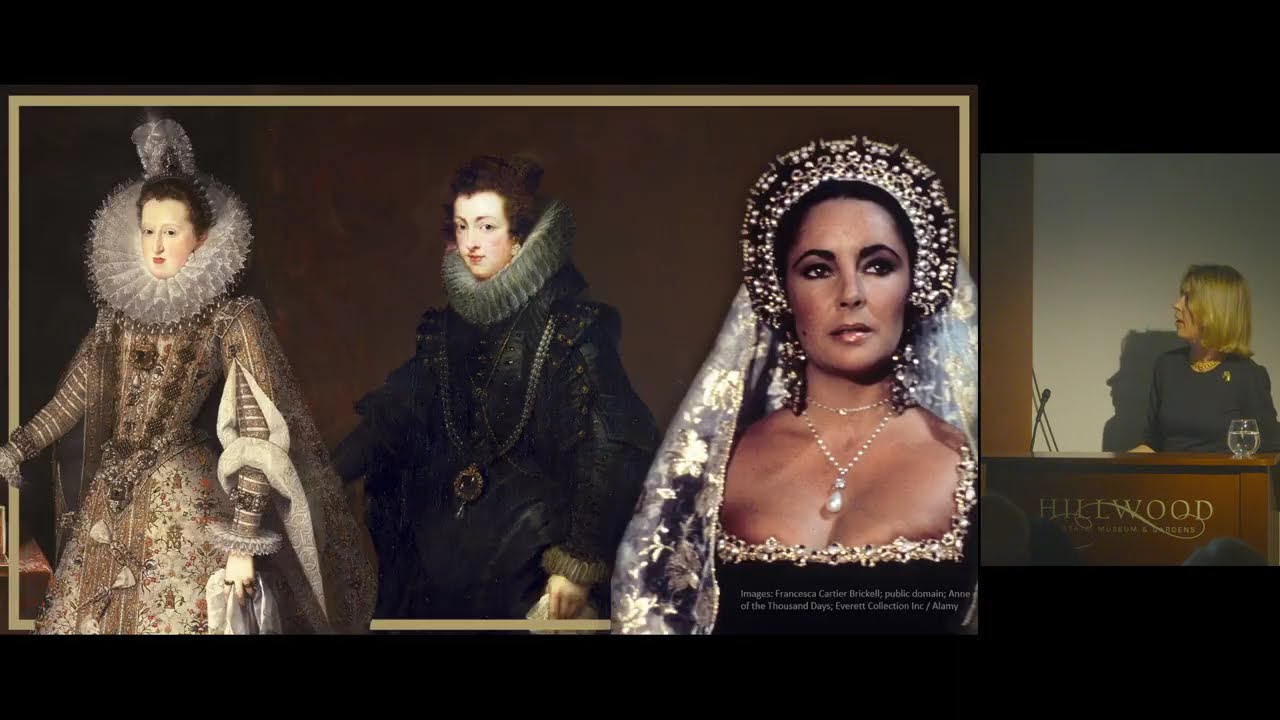
Every term in this glossary traces back to the family behind the jewellery empire. The complete story — four generations, three brothers, and a century of history — is in The Cartiers by Francesca Cartier Brickell, direct descendant of Jacques Cartier.
About the book