What Is the Cartier Crash?
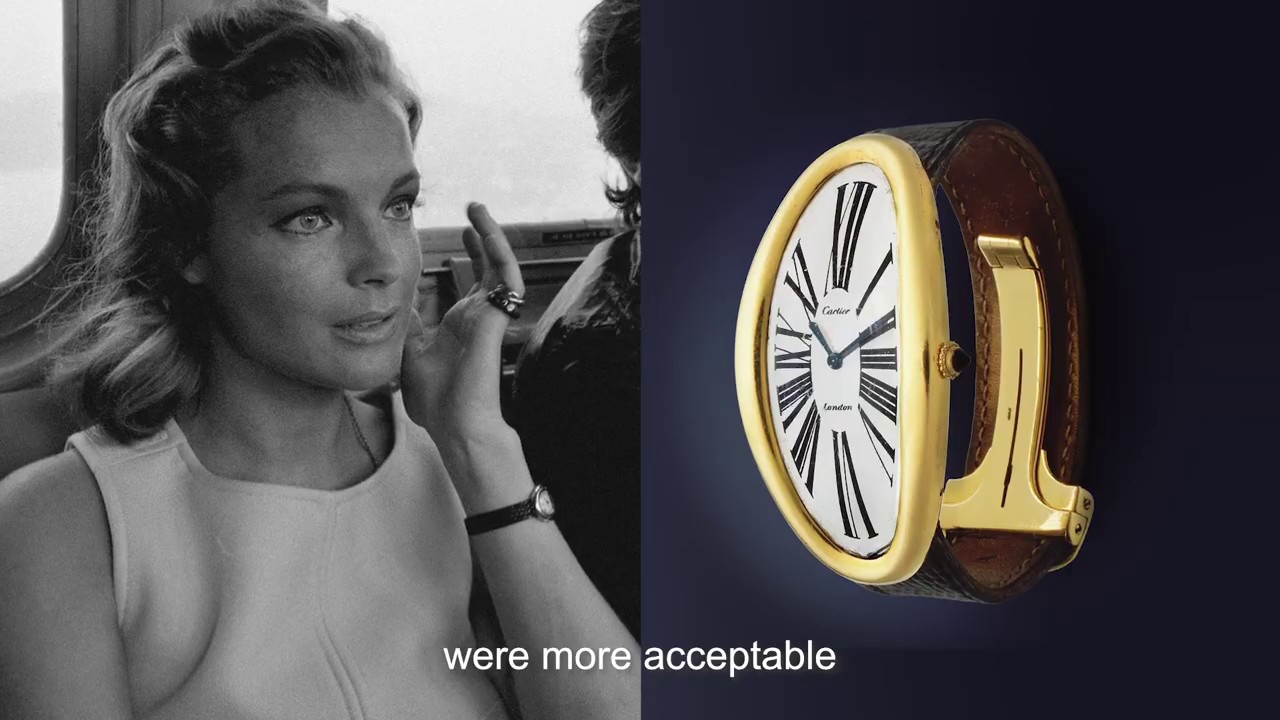
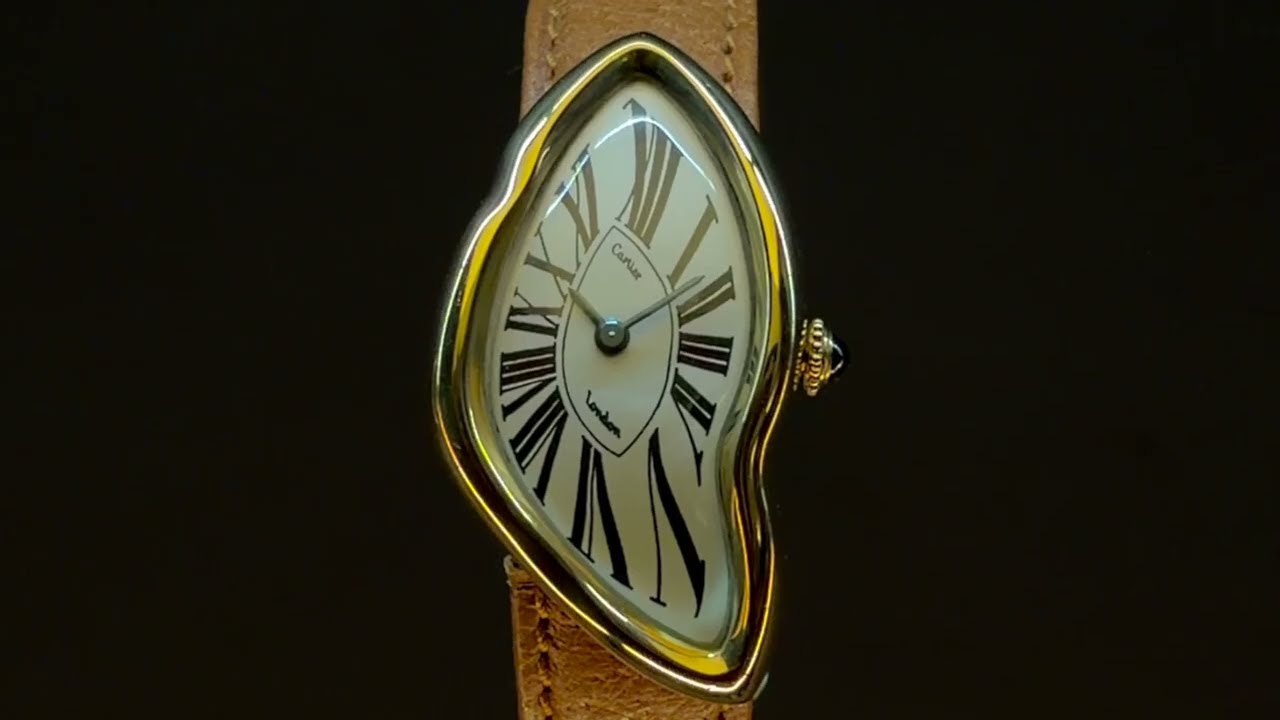
The Cartier Crash is a wristwatch with a dramatically distorted case: the dial is asymmetric, the outline curves and warps, and the whole form appears to have been melted or twisted out of shape. Created at 175 New Bond Street in a collaboration between Jean-Jacques Cartier and head designer Rupert Emmerson, and produced from 1967, it is one of the most distinctive watch designs of the twentieth century and among the most avidly collected vintage Cartier pieces. The design reflects a guiding principle Jean-Jacques had inherited ('Never Copy, Only Create'), made visible in its refusal of every conventional watch outline.
Design and Making
The brief Jean-Jacques gave Emmerson was to take the popular Oval (Baignoire Allongée) and adjust it to look as though it had been in a crash: "by pinching the ends at a point and putting a kink in the middle." Emmerson presented several variants, including one with a cracked-looking dial to reinforce the crash theme; Jean-Jacques felt that went too far and asked him to tone it down, so the cracked dial was abandoned and a cleaner distorted form was approved. Jaeger-LeCoultre was consulted on the most appropriate movement to use before the design was passed to Wright & Davies to fabricate the case from sheets of gold. A standard case takes around thirty-five hours; the Crash, with its irregular curves, took considerably longer. Once the case was completed, Cartier London’s head watchmaker Eric Denton faced a further complication: the distorted outline meant the dial numbers could not sit at their standard positions and still tell the time correctly. The dial had to be extracted and repainted by Emmerson multiple times before the watch read correctly.
The Origin of the Name
One account holds that the design was inspired by a Baignoire watch genuinely damaged in a car crash, whose warped case was brought into the workshop as the starting point. Whether or not that version is accurate, the finished design is clearly deliberate: the distortion is precise, the asymmetry controlled.
How the watch was first received in London, including the response from some of Cartier’s top clients, is told in An Original Cartier Crash: Hand-drawn by Rupert Emmerson and in The Cartiers, ch. 11.
Production and Auction Records
Just over a dozen Crash watches were made under Jean-Jacques Cartier, across a relatively short initial production run. This scarcity, combined with the watch’s visual impact, has made surviving examples highly coveted at auction. A 2022 Loupe This online auction saw a 1967 London Crash sell for a hammer price of $1.5 million, a world record for any Cartier watch, as documented at the time. Earlier auction appearances are documented in Crash Watch: The Most Important Vintage Watch of 2021; a collection featuring multiple original examples is discussed in 88 Cartier Watches in 1 Collection.
Case and Dial
The Crash case is an asymmetric elongated form, approximately 23 by 43mm, though given the warped outline conventional measurements apply loosely. The case narrows at both ends (where the strap attaches) and swells and pinches through the middle, with a distinct kink that breaks the symmetry and gives the watch its melted or twisted appearance. The dial is cream or off-white, carrying Roman numerals in black that are themselves distorted to follow the irregular case shape: numerals are compressed, stretched, or tilted depending on their position within the warped aperture. The "Cartier London" signature is hand-lettered by Rupert Emmerson rather than printed from a standard template, and sits on the upper portion of the dial. Hands are blued steel, proportioned to the available dial space. The winding crown carries a sapphire cabochon. No two original Crash dials are identical: because the numerals had to be hand-painted to read correctly within the distorted case, each dial was extracted and repainted multiple times until the timekeeping was accurate.
Original production examples were in 18K yellow gold. Examples carry London hallmarks with date letters that place them within the production period.
Sources
- Francesca Cartier Brickell, The Cartiers (Ballantine Books, 2019), ch. 11 (“The End of an Era, 1957–1974”)
- Loupe This, Cartier London Crash (1967), world record $1.5 million hammer, May 2022
- Sotheby's, Crash, 18K yellow gold (c.1970), CHF 806,500, 2021
- Phillips, “The (Real) Story Behind The Cartier Crash,” 2022 (excerpt from The Cartiers)
- Revolution Watch, “A Collector's Guide: The Cartier Crash,” December 2023
- Christie's, “Cartier Crash Watch Collecting Guide”