Kumar Shri Ranjitsinhji Vibhaji, known in cricket as K.S. Ranjitsinhji or simply Ranji, was born in 1872 in the Kathiawar region of what is now Gujarat. He went to England as a young man and became one of the most celebrated cricketers of the late Victorian and Edwardian eras, playing for Sussex from 1895 and representing England in the Test matches. He was widely admired for his batting technique, particularly his leg glance, which was thought at the time to be an innovation he brought to the game.
He succeeded to the throne of Nawanagar in 1907 and became Maharaja Jam Sahib, taking on the responsibilities of a princely ruler while remaining a figure of great fame in Britain. His dual identity, Indian prince and English sporting hero, gave him a particular standing in the overlapping worlds of Indian royalty and Cartier and British society.
Jacques Cartier and the Maharaja
Of the three Cartier brothers, it was Jacques Cartier who was closest to the Maharaja. Their relationship went well beyond that of jeweller and client. The two men shared a genuine personal friendship, and Jacques's children remembered holidaying with the Maharaja as a child. This closeness gave Jacques an understanding of the Maharaja's tastes and ambitions that shaped some of the most remarkable commissions the firm undertook for any Indian patron.
Ranjitsinhji's time in England meant he was not a remote client reached only through agents. He visited London regularly, and his cricketing fame meant he moved in the same British social circles as the Cartier brothers. He attended the Delhi Durbar of 1911 among the assembled princes of India, a gathering that cemented many of the relationships between the courts and the European jewellery houses.
The Nawanagar Necklace
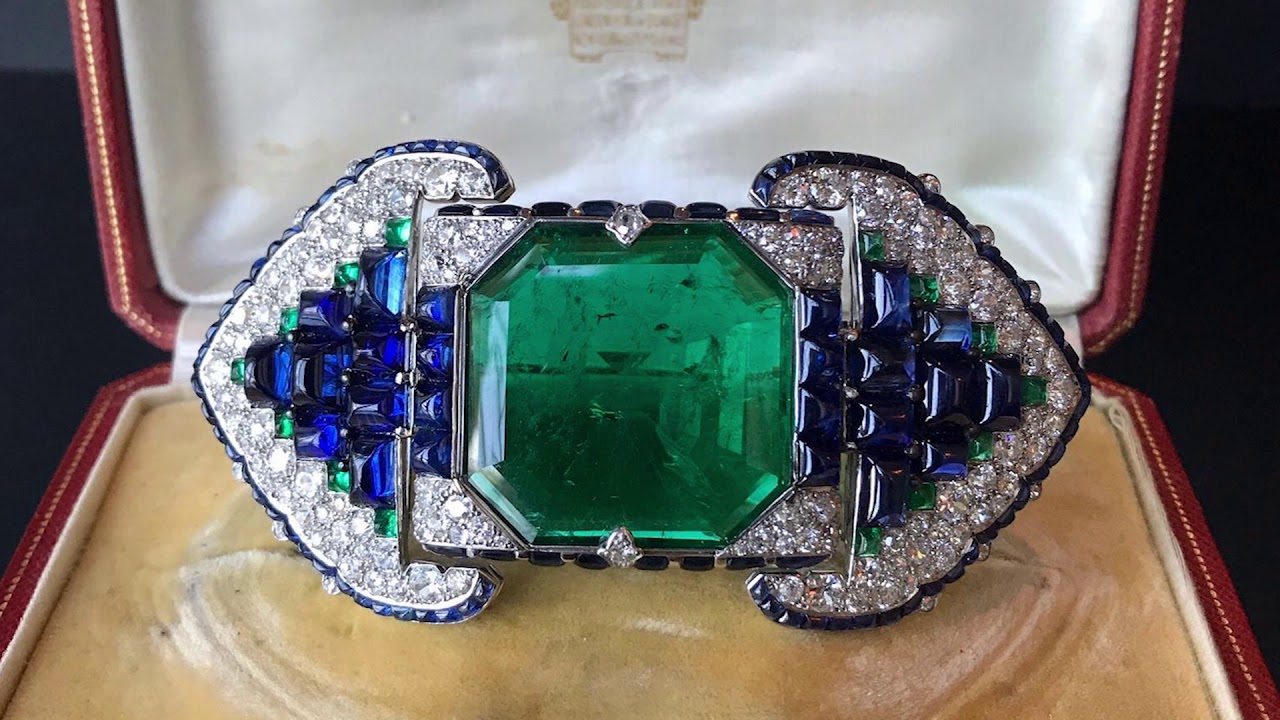
Together, Jacques and the Maharaja built what has been described as one of the most remarkable necklaces Cartier produced for the subcontinent: a multi-strand piece assembled from coloured diamonds of exceptional quality. The necklace brought together diamonds of vivid and varied hues in a concentration that was unusual even by the standards of the great Indian patrons. It was a collaborative effort, drawing on the Maharaja's access to extraordinary stones through his treasury and the Indian gem trade, and on Jacques's skill in designing settings worthy of them.
His treasury also held natural pearls of significance, a material central to the Indian princely tradition and to Cartier's trade with that world.
Later Life and Legacy
Ranjitsinhji died in 1933, having ruled Nawanagar for twenty-six years. His jewellery collection dispersed through his estate and successors. Pieces from what had been the Nawanagar treasury appeared at auction in subsequent decades, though attribution and provenance are not always fully documented. On 19 June 2019, Christie's sold a group of jewels from the Nawanagar collection. His name remains better known in cricket history than in the annals of jewellery collecting, but the two aspects of his life were part of the same remarkable biography.
Sources
- Francesca Cartier Brickell, The Cartiers (Ballantine Books, 2019), ch. 7 (“Precious London: Late 1920s”) and ch. 8 (“Diamonds and Depression: The 1930s”). “Jacques was closest to the Maharaja.”
- Hans Nadelhoffer, Cartier: Jewelers Extraordinary (Thames and Hudson, 1984; revised 2007), pp. 169, 241 et al.
- Wikipedia: Maharaja of Nawanagar